What is an OnlyFans chatter? (do you need one)
An OnlyFans chatter is a paid human who logs in and messages your fans as you. Here is what they cost, the real risks, and the local alternative.
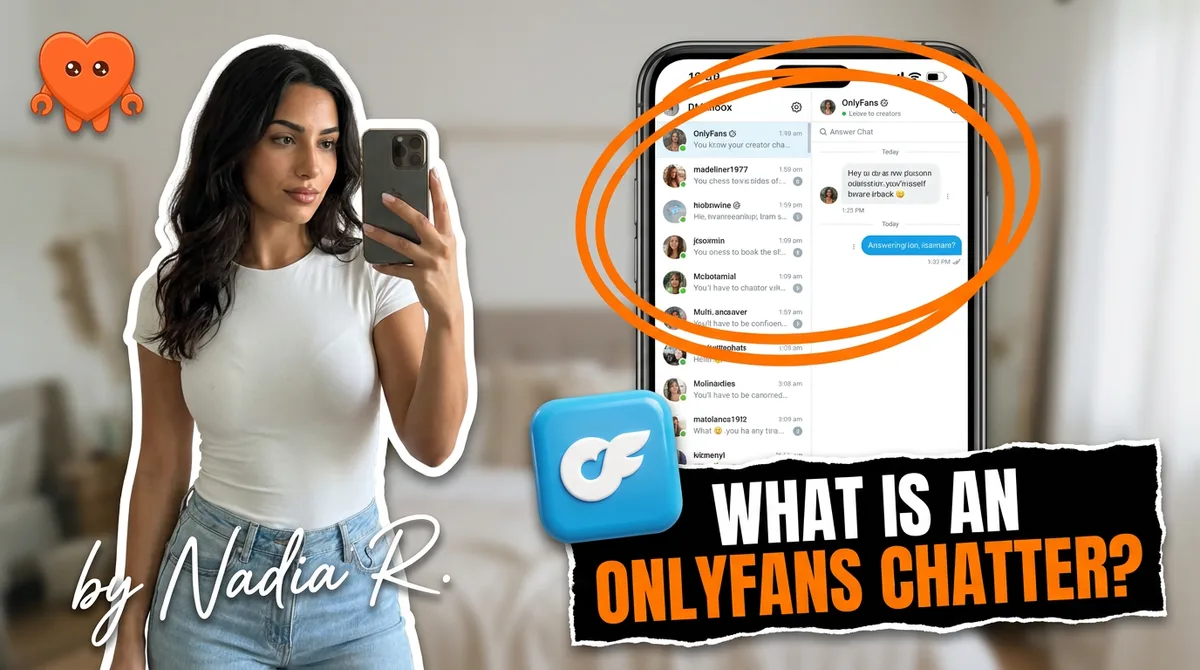
An OnlyFans chatter is a paid human, usually hired through an agency or a third-party chatting service, who logs into a creator's account and answers her fan messages while posing as the creator. The chatter builds rapport, sends pay-per-view content, and nudges fans toward tips. Most fans are never told they are talking to staff instead of the creator. Chatters exist because messaging drives an outsized share of creator income, and answering it well takes hours most solo creators do not have.
This guide explains plainly what a chatter is, what one actually costs, the honest pros, and the real risks (a stranger reading your fans' messages, the authenticity gap, credential exposure, and the margin you give up). Then it covers the third option between burning out and renting your voice to someone else.
What is a chatter on OnlyFans?
A chatter is the person who types your DMs for you. On OnlyFans and Fansly, a chatter signs into your account, reads incoming fan messages, and replies as if she were you. The job is part conversation and part sales: keep the fan engaged, remember small personal details, and time the next pay-per-view or tip ask so it lands. Chatters are hired either directly or, far more often, through an agency that staffs your inbox.
The scale is bigger than most fans assume. Reporting on the industry has shown that agency chatters often work eight-hour shifts and are assigned three or four creator inboxes at a time. So the warm, personal message a fan reads at midnight may come from someone managing several creators at once, with notes about each one open in another tab. That is the part of the business that stays out of view.
It helps to separate two words people use interchangeably:
- Chatter. The individual employee writing the replies.
- Chatting agency (or third-party chatting service). The company that employs the chatters, assigns them to your account, and takes a percentage. On Fansly the same divide shows up as an in-house management session versus an outside chatter agency that staffs your DMs remotely.
Do OnlyFans creators actually message you?
Sometimes, and often not. Whether the creator is the one replying depends mostly on her size. Smaller creators, roughly under a few hundred subscribers, usually answer their own messages because the volume is manageable and the personal touch is their edge. As an account grows, the inbox becomes a full-time job, and many mid-size and large creators hand it to chatters.
There is no rule that forces a creator to disclose when a chatter is replying, so a fan usually cannot be certain. Creators make a meaningful share of their earnings through messaging (for one top earner whose dashboard was analyzed publicly, over half of revenue came from paid private messages), which is exactly why outsourcing the inbox is so common once an account scales. The same revenue lever that makes the DMs worth automating is what makes them worth handing to paid staff.
If you want the deeper version of this question, including how automated flows differ from a live human chatter, see are OnlyFans messages automated. The short version: a fan is sometimes talking to the creator, sometimes to a chatter, and sometimes to a scripted flow, and the lines between them are blurry on purpose.
How much does an OnlyFans chatter cost?
A chatter is rarely a clean line item. Most creators do not pay a chatter a salary directly. Instead, chatting is folded into a full-service agency cut, typically 30 to 40 percent of your gross, charged on top of the 20 percent OnlyFans already takes. Standalone chatting services usually charge a percentage of the revenue their messages generate. Individual chatters, for context, earn somewhere around 650 to 5,500 dollars a month, paid by the agency, not by you.
Run the math and the give-up is steep. Here is the stack on a 10,000 dollar revenue month, with a 35 percent agency cut that includes chatting:
| What | Takes | You keep |
|---|---|---|
| OnlyFans platform fee | 20% (2,000 dollars) | 8,000 dollars |
| Agency cut (incl. chatting) | 35% of gross (3,500 dollars) | 4,500 dollars |
| Your take-home | 4,500 dollars |
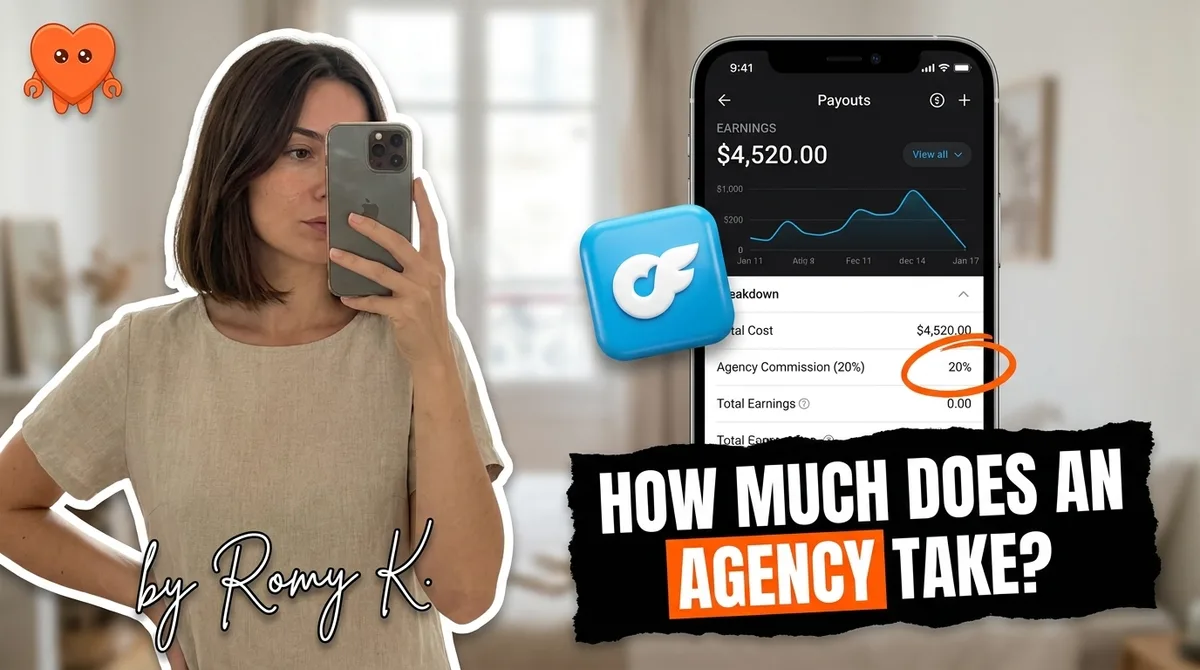
That is 45 cents on the dollar reaching you, before your own content costs. A cut that size can be worth it if the agency genuinely grows your revenue past what you would earn alone, but the burden of proof is on them. For the full breakdown of agency math and where the line between fair and theft sits, see how much does an OnlyFans agency take.
The standalone vs bundled trap. A "chatting only" service that quotes a low percentage can still cost more than it looks once you add your own time managing them, the revenue they leave on the table during slow shifts, and the fans they lose to copy-paste replies. Cheap chatting that churns your subscribers is not cheap.
The real risks of hiring a chatter
The honest case against a chatter is not moral, it is operational. There are four risks that creators consistently underestimate, and they compound.
A stranger reads and answers your fans
When you hire a chatter, a person you have never met reads every private message your fans send and answers in your name. They see the vulnerable ones, the regulars who treat the DMs like a relationship, and the details fans share thinking they are talking to you. You are trusting that person, and everyone on their shift rotation, to handle your fans with care and to keep what they read private. That trust is hard to verify and easy to lose.
The authenticity gap
Fans are getting better at spotting chatters, and resentment follows. The common tells are well known in fan communities:
- Replies that forget something you said an hour ago.
- Identical lines that clearly went out to everyone.
- A relentless push toward the next pay-per-view unlock.
- A tone that shifts noticeably between shifts (a different person is typing).
When a fan realizes the "girlfriend experience" he paid for was a rotating team, he does not just stop spending. He often feels deceived, and that story spreads. Former agency staff have publicly described the work as intentionally misleading fans, which is the reputational risk you inherit when you outsource your voice.
Credential exposure. To staff your inbox, an agency needs to log in as you. That usually means handing over your password so chatters can sign in from their own machines and servers. Credential-sharing is the exact pattern platforms watch for, because a third party signing in as you looks the same whether it is help or a takeover. If the agency's setup gets flagged, your account inherits the suspicion, and you are not the one holding the keys anymore.
The margin you give up. Every point of cut is permanent. A 35 percent chatting-inclusive cut means you need a large revenue lift just to break even versus running the inbox yourself. The chatter has to grow your account by more than a third before you are even, and most of that growth, if it comes, comes from messaging you could increasingly cover another way.
Do you actually need a chatter? A decision list
You may not. A chatter solves a real problem (the inbox never sleeps and you do), but it is one of several ways to solve it. Work through this before you sign anything:
- Are you actually losing revenue to slow replies? Track your response times for a week. If fans cool off before you answer, the inbox is a real bottleneck. If not, a chatter is solving a problem you do not have.
- Do you value the personal relationship as your edge? If "she actually talks to me" is why fans subscribe, handing the DMs to a rotating team can quietly erode the exact thing they pay for.
- Can you stomach a 30 to 40 percent cut on top of the platform's 20? If breaking even requires a big revenue jump, be honest about whether the agency can deliver it.
- Are you comfortable sharing your login? If handing your password to people you will never meet keeps you up at night, that is a signal, not paranoia.
- Have you tried covering the inbox without a human? Authored message flows and an on-device agent can carry the routine replies before you ever pay anyone a cut.
- Do you want to stay anonymous and keep your data local? A chatter agency holds your fans' messages on their servers. If privacy matters, that is a cost no commission rate shows you.
If you answered "no" to most of these, you probably do not need a chatter yet. You need coverage, not a cut.
The third option: an agent that runs on your machine
There is a middle path between burning out doing every DM yourself and renting your voice to a stranger. FanClaw is a local-first app that runs a creator's DMs, posting, acquisition, and monetization from her own machine, text-only, with her fan data never leaving the device. Instead of a human chatter logging in from somewhere else, an agent learns your editorial style (your wording, pacing, openings, and emojis) and drafts replies that sound like you, while you approve what matters.
That setup answers the four risks above directly:
- No outside human reads your fans. The agent runs locally. Your messages never sit on an agency's servers, and no shift worker scrolls your inbox.
- It writes in your voice, not a generic script. "Voice" here means your editorial style, the way you actually type, learned from your own past messages. There is no rotating tone, because there is no rotation.
- Your login never leaves your laptop. Nothing to hand over, nothing for a third party to get flagged for. You can run your DMs on your own machine and watch a full first night locally before you commit to anything.
- You keep your margin. No 30 to 40 percent cut. The work happens on your computer, and the revenue your inbox generates stays yours.
The honest framing is this: a chatter rents you another person's hours and another person's discretion, at the price of your margin and your privacy. An on-device agent gives you the coverage without the stranger. If you want to keep the relationship that makes fans pay while still protecting your nights, that is the trade-off worth weighing. You can see what it costs to keep your margin and compare it to a percentage cut that never ends.
For the messaging mechanics themselves (what is allowed, what gets accounts flagged, and how to run automation safely), see automate OnlyFans DMs without getting banned. The chatter question is really a coverage question. The answer does not have to be a person who logs in as you.
Frequently asked questions
A chatter is a paid person, usually hired through an agency or a third-party chatting service, who logs into a creator's account and answers fan messages while posing as the creator. They build rapport, send pay-per-view content, and push tips. Most fans are not told they are talking to staff rather than the creator herself.
Sometimes, and sometimes not. Smaller creators (roughly under a few hundred subscribers) usually answer their own DMs. Many mid-size and large creators outsource messaging to chatters who work in shifts and may handle three or four inboxes at once. There is no rule forcing disclosure, so you often cannot tell.
Chatting is rarely billed as a flat fee. It is usually bundled into a full-service agency cut of 30 to 40 percent of your gross, on top of the 20 percent OnlyFans already takes. Standalone chatting services often charge a percentage of the revenue their messages generate. Individual chatters earn roughly 650 to 5,500 dollars a month, paid by the agency, not by you directly.
Using a chatter is not banned by itself. The risk is in how it is done. Handing your login to an agency means a third party signs in as you from their own servers, which is the credential-sharing pattern that gets accounts flagged. As of 2026 the platform also expects disclosure when replies are AI-generated.
Increasingly, yes. The common tells are replies that forget what you said earlier, copy-paste lines sent to everyone, a constant push toward unlocking the next pay-per-view, and a tone that shifts between shifts. Fans on forums actively trade these red flags, and resentment grows when they feel deceived.
A chatter is the individual person typing the replies. A chatting agency (or third-party chatting service) is the company that employs the chatters, assigns them to your inbox, and takes a cut. On Fansly the same split exists between an in-house management session and an outside chatter agency that staffs your DMs remotely.
No. Messaging drives a large share of creator income, so the inbox matters, but a chatter is only one way to cover it. You can answer DMs yourself, use authored message flows, or run an agent on your own machine that drafts replies in your editorial style while you approve what matters. The goal is coverage without renting your voice to a stranger.
It is a common complaint. Outside agencies juggle many inboxes across time zones, so replies can lag during off-peak shifts, and quality drops when a chatter does not know your fans. An in-house setup or an on-device agent that runs while you sleep tends to respond faster because it is not splitting attention across other creators.