Are OnlyFans messages automated? an honest guide
Are OnlyFans messages automated? Often yes, and it is allowed. Here is how creators use automation, how to spot it, and how to do it authentically without bans.
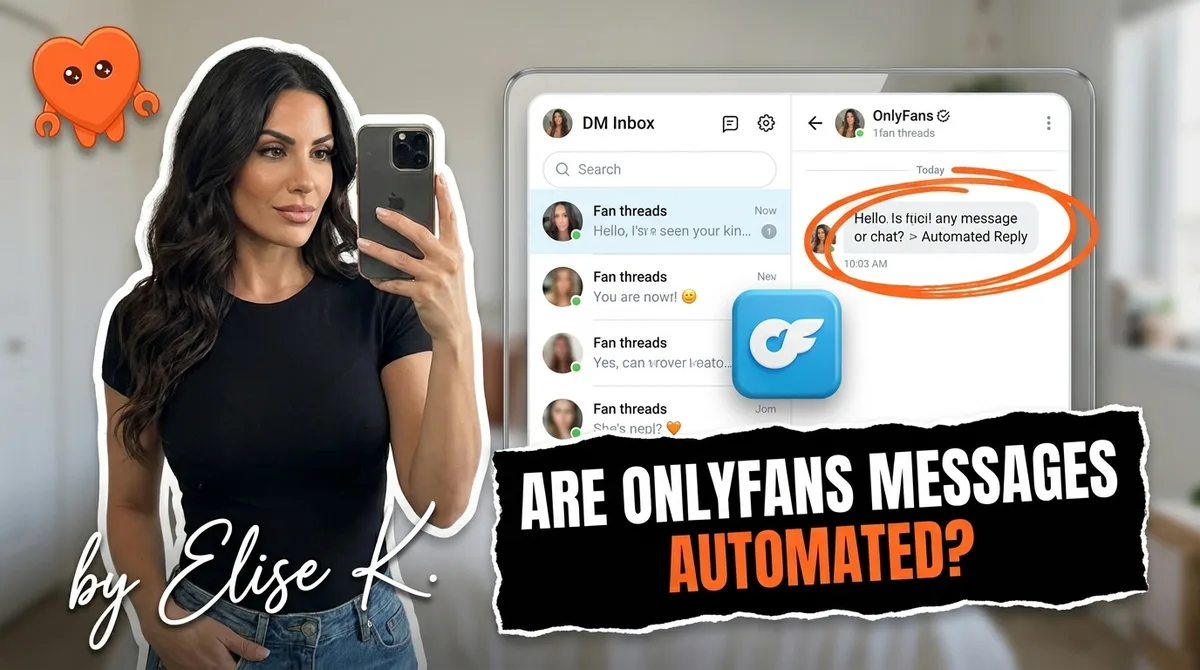
Yes, many OnlyFans messages are automated. Welcome messages, timed follow-ups, and mass broadcasts are standard tools that most serious creators already use. The platform allows them. What OnlyFans does not allow is narrower: sharing your login with a cloud tool that signs in as you, and, as of 2026, using AI to reply without disclosing it. Outside those two lines, automation is one of the most legitimate strategies in the creator playbook.
This guide answers the question honestly from both sides: what fans notice, what creators actually do, and how to run it cleanly so automation helps the business instead of threatening the account.
How common are automated OnlyFans messages?
Automated OnlyFans messages are widespread. Welcome messages to new subscribers are almost universal among full-time creators. Mass messages, timed follow-ups, and re-engagement nudges are standard tools at every level above a few hundred fans. The OnlyFans platform itself offers basic scheduling and mass-message features, which signals that automation is part of the intended use model, not a workaround.
The creator economy has also built an entire industry around inbox automation. Services like Supercreator, Infloww, and FansMetric exist because the demand for automated or managed chatting is real and ongoing. None of this is secret. It is how creator businesses run at scale.
The short answer for fans wondering whether a reply was written just for them: sometimes yes, often no, and the honest ones will tell you.
How to tell if an OnlyFans message is automated
There are patterns that reveal low-quality automation quickly. Genuine automation built around the creator's real voice is much harder to spot.
Signs of low-effort automation
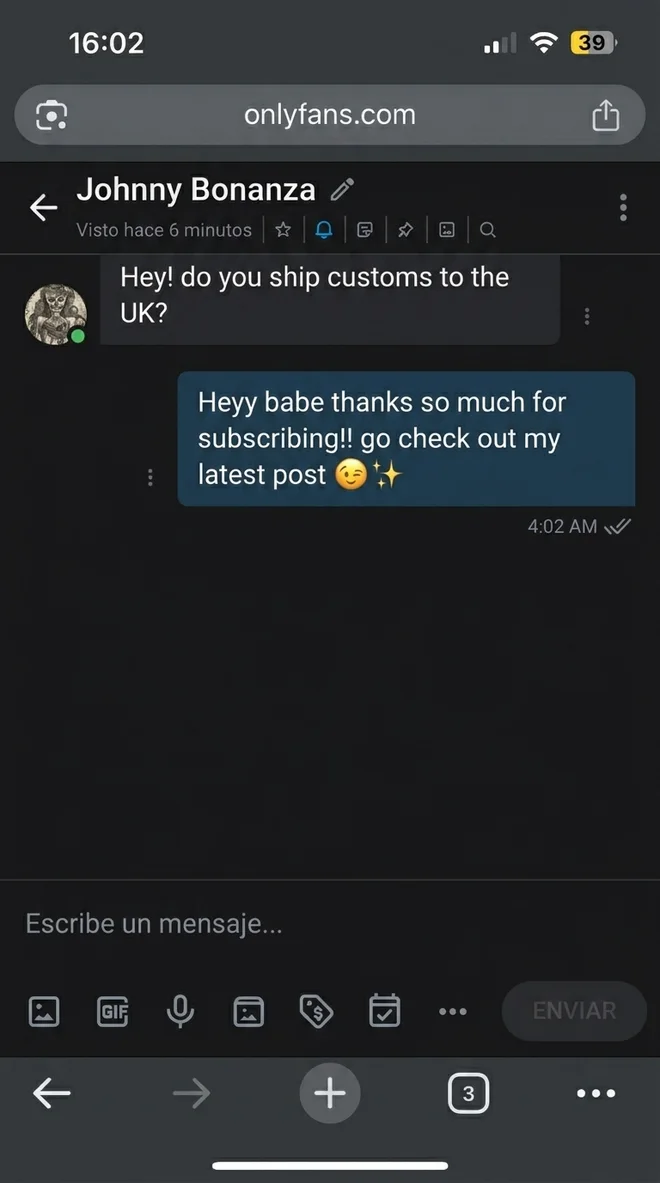
Generic openers are the biggest tell. If the first message could have been sent to anyone on the platform, it probably was. Watch for replies that ignore what you said in the previous message, answers that arrive in under thirty seconds at 4am regardless of time zone, and wording that sounds identical to messages you have seen from other creators. These patterns point to a tool sending canned text, not a person reading your message.
Signs of sophisticated automation
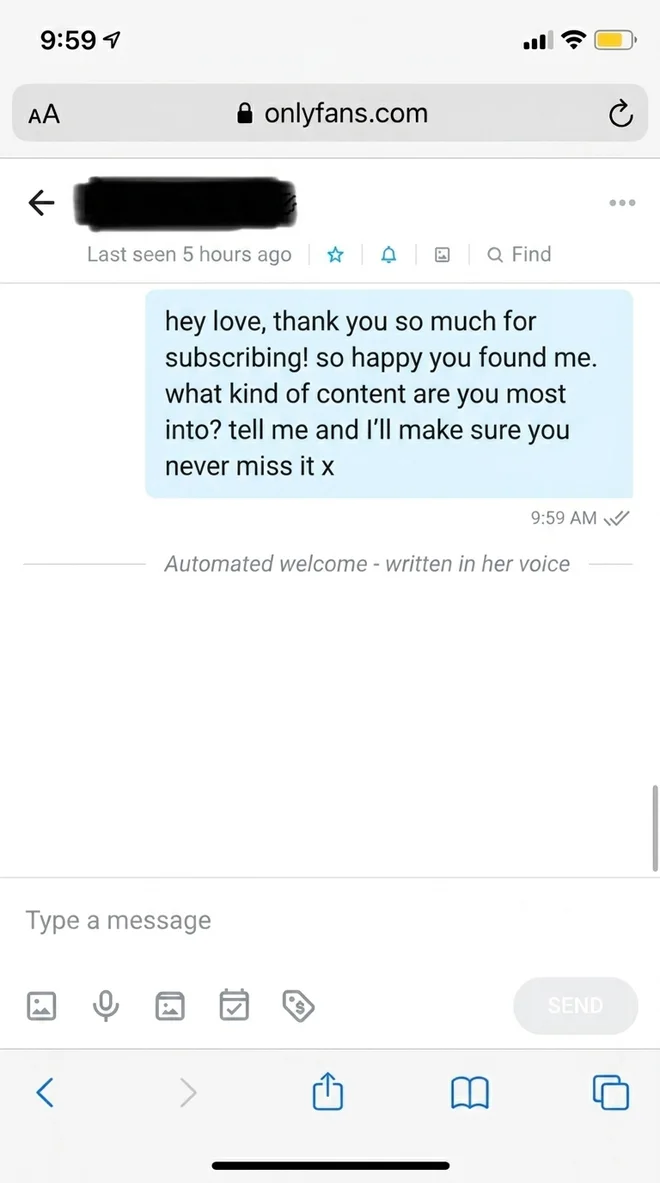
Quality automation is harder to distinguish from a real reply. It uses the creator's actual vocabulary and emojis, arrives after a natural delay rather than instantly, and responds to the actual content of your message. A follow-up that references your earlier purchase or asks a question specific to your situation reads as human, whether it is or not. As of 2026, if an AI model drafted the reply, OnlyFans expects the creator to disclose it. Look for small disclosure notes if you want to know.
What the platform sees
OnlyFans monitors for spam signals: identical messages blasted at high volume in short windows, abnormal login locations, and flag patterns that suggest automated credential use. The platform is not trying to ban automation. It is trying to prevent abuse and account takeovers. A creator running timed, on-voice messages from her own device looks like a creator. A cloud service logging in as her from a server in a different country looks like a compromised account.
Why creators use automated messages
The business case is straightforward. A solo creator managing a few hundred to a few thousand subscribers is essentially running a media company, a customer service operation, and a sales function simultaneously. DMs are the highest-revenue channel, and they are also the most time-intensive.
A creator who does every reply by hand wakes up to 200 or more unread messages, spends the morning catching up, films or creates during the day, and goes back to the inbox until 2am. That schedule burns people out within two to three months. It is the number one reason creators quit.
Automation does not replace the high-value conversations. It handles the predictable ones. Three flows cover the majority of inbox revenue for most accounts:
- Welcome flow. A new subscriber is at peak engagement the moment they join. An immediate, on-voice welcome with a soft next step captures intent that a reply eight hours later cannot match.
- Follow-up. Most conversions happen after the first message. A timed follow-up to anyone who engaged but did not buy recovers a measurable share of revenue that would otherwise disappear.
- Re-engagement. Fans who have gone quiet rarely return on their own. A scheduled nudge, sent in the creator's voice, brings back a portion of lapsed subscribers without any manual tracking.
Set those three up once and the morning catch-up shrinks from two hours to fifteen minutes. That is the realistic version of why creators automate. Not to disappear from the inbox, but to stop drowning in it.
What is allowed and what gets accounts banned
The rules are clearer than most creators realize. Automation is permitted. A small number of specific behaviors are not.
What OnlyFans allows
- Welcome messages and timed follow-ups to new subscribers
- Mass messages sent to your full subscriber list or segments of it
- Scheduled content and messages prepared in advance
- AI-assisted replies, provided they are disclosed to the recipient
These are documented or widely accepted practices. Millions of accounts use them without issue.
What triggers bans
The real risks cluster in four areas:
- Credential sharing. Handing your login to any cloud tool that signs in as you is the biggest account risk in the entire automation space. If the service's servers are flagged, your account is exposed. If the service is breached, your credentials are compromised. The fastest way to lose your account is handing your login to a cloud tool that signs in as you.
- Undisclosed AI. As of 2026, OnlyFans expects creators to disclose when a reply is generated by an AI model. Omitting that disclosure is a violation, not the AI use itself.
- External payment links. Pushing fans toward outside payment processors to avoid the platform's 20 percent cut is keyword-watched and actively enforced. Keep transactions on-platform.
- Spam-volume identical blasts. Mass messages are allowed. Sending thousands of identical, context-free messages in rapid succession triggers spam filters and pattern detection.
Stay clear of those four and the risk of an automation-related ban is low.
How to automate your OnlyFans messages safely
Safe automation comes down to three things: where it runs, whose words it uses, and what oversight you keep.
Run it on your own machine
The cleanest setup keeps the automation local. When a tool runs on your computer rather than on a company's server, your login never leaves your machine. No third party can access your fan conversations, see your earnings, or act as you from an unfamiliar location. This is the structural difference between local automation and cloud-based chatting services.
FanClaw is built on this principle. It is a local-first app that runs your DMs, posting, acquisition, and monetization from your own machine. Fan data never leaves your device. If you want to see what that looks like in practice, you can automate your OnlyFans DMs using the setup guide or download FanClaw and run a full first session locally.
Write every flow in your voice
Automation that sounds like you does not stand out, because it behaves exactly as you would on a productive day. Build your welcome message, follow-up, and re-engagement flow using your real words, your emojis, your usual pacing. The goal is not to manufacture a persona. It is to send your actual voice to more people, more consistently, than you could by hand.
Keep a human in the loop on what matters
Automation handles the predictable situations. Custom content requests, fans who seem upset, anything involving a significant purchase: these deserve a real read. Keep an approval step on anything sensitive, and treat the inbox as two tiers. The first tier runs itself. The second tier gets your full attention. That division is what makes automation sustainable instead of embarrassing.
The transparency question: should you tell fans?
This question comes up more than any other, and the answer has two parts.
For AI-generated replies, disclosure is now an expectation on OnlyFans as of 2026. A short note, a consistent footer, or a profile disclosure covers it. Fans are not as opposed to it as creators fear. What frustrates fans is feeling deceived, not feeling assisted.
For pre-written flows you authored in your own words, the situation is closer to a scheduled text message. You wrote it, you approved it, it sounds like you. There is no universal obligation to flag that a message was queued. That said, setting honest expectations around your response time is good practice regardless. Fans who know you respond within a day have better experiences than fans who expect instant replies and get silence.
Transparency, done simply, almost always builds more trust than it costs. The creators who lose fans over automation are the ones who got caught with generic scripts, not the ones who said "I use some automation to keep up."
Practical summary: who runs automated messages well
Creators who get the most from inbox automation share three traits. They run it locally so no credentials are exposed. They write their own message templates so the voice never drifts. And they keep a genuine presence in the conversations that deserve it, which turns automation from a replacement into a multiplier.
The tool landscape matters here. Chatting tools like Supercreator and Infloww work, but every one of them requires you to hand over your login to its own system. That is a trade-off. Local-first tools eliminate it. One agent on your own machine, handling the predictable work, while you stay in control of what your fans actually experience. That is what sustainable automation looks like in 2026.
Frequently asked questions
Many OnlyFans messages are automated, yes. Welcome messages, timed follow-ups, and mass messages are standard tools top creators use. The platform allows automation as long as creators do not share their login with a third-party cloud tool and, as of 2026, disclose when a reply is AI-generated.
Obvious signs are instant replies at unusual hours, generic openers that ignore your previous message, and copy-paste wording across multiple creators. Sophisticated automation designed in the creator's voice and timed with natural delays is nearly impossible to detect. The platform monitors for spam patterns, not the automation itself.
No. Automated welcome messages, follow-ups, and mass messages are explicitly part of how the platform is used. Two things do cross the line: handing your login to a cloud service that signs in as you, and using AI to reply without disclosing it to fans, which OnlyFans expects as of 2026.
At scale, very few do. Top earners typically use a mix of automated flows for common situations and a human or managed approval layer for high-value or sensitive conversations. Doing every reply manually while running a full content calendar is not sustainable past a few hundred active fans.
Not for automation itself. The ban triggers are credential-sharing with cloud tools, undisclosed AI replies, steering fans to external payment links, and spam-level identical blasts. Local automation that stays in your voice and keeps a human in the loop for sensitive moments carries very low risk.
Run the automation on your own machine so no third party holds your login. Write every flow in your own words. Disclose when AI drafts a reply. Keep a human approval step for anything involving custom requests or significant money. That combination is both compliant and effective.
A local-first app like FanClaw runs the automation on your own machine, so your login and fan conversations never sit on a third-party server. It handles welcome flows, follow-ups, and mass messages in your voice without any outside party holding your credentials.
The exact number is not public, but welcome messages and mass messages are near-universal among full-time creators. The OnlyFans platform itself provides basic scheduling tools, and the broader market of chatting services and automation tools is large and growing.