Automate OnlyFans DMs without getting banned
Yes, you can automate your OnlyFans DMs safely. Here is what the platform actually allows, what gets accounts banned, and how to do it from your own machine.
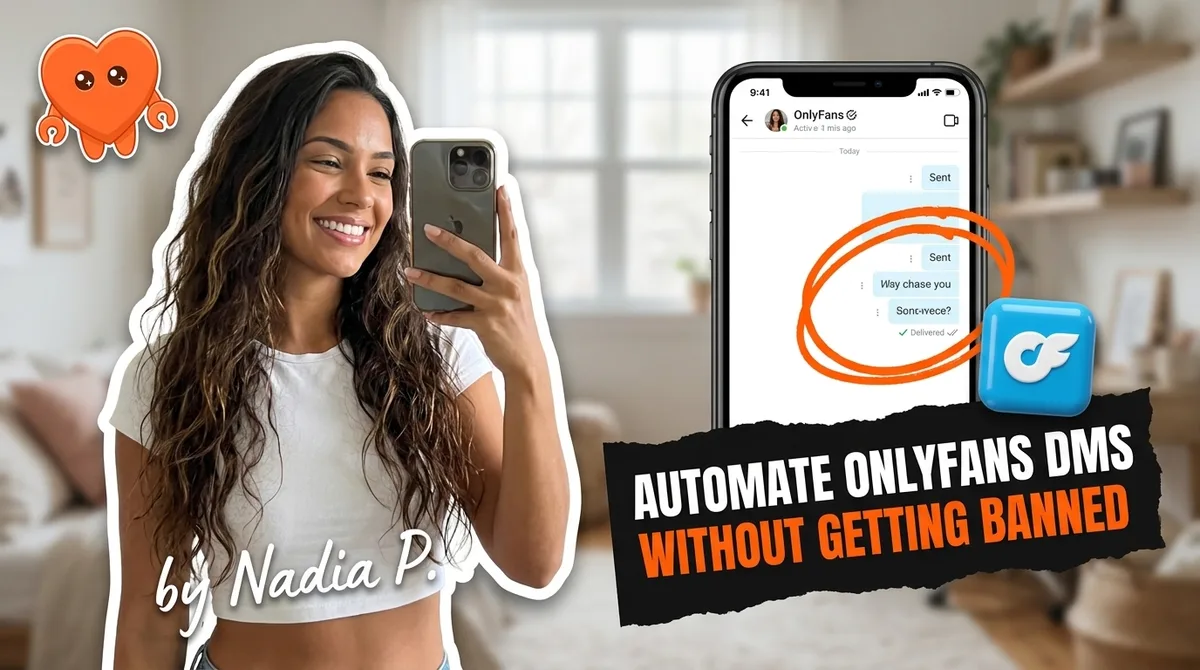
Yes, you can automate your OnlyFans DMs without getting banned. The platform allows automated welcome messages, follow-ups, and mass messages, and most top earners already use them. What gets accounts in trouble is narrower than people think: handing your login to a tool that signs in as you, blasting robotic messages that sound nothing like you, and, as of 2026, using AI to reply without disclosing it. Get those three things right and automation is one of the safest moves you can make.
This guide covers what is actually allowed, what truly triggers bans, and how to automate from your own machine so the work happens without a stranger holding the keys to your account.
Is automating OnlyFans DMs allowed?
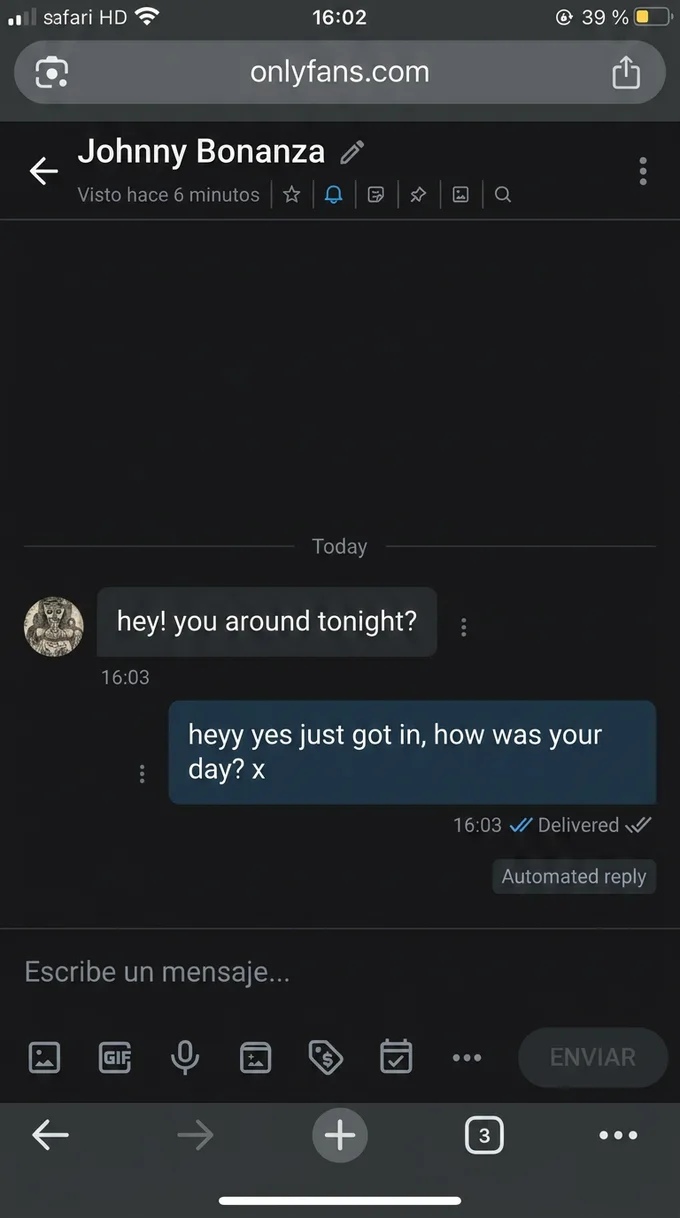
Automation is permitted and widespread. Welcome messages to new subscribers, timed follow-ups, and scheduled mass messages are built into how the platform is used, and creators at every level rely on them. The grey area is not the act of automating. It is who runs the automation and how human it feels.
Two rules matter most. First, OnlyFans does not want third parties logging in as you, which is why credential-sharing carries real risk. Second, as of 2026 the platform expects you to disclose when a reply is generated by AI rather than written by you. Neither rule bans automation. They shape how you do it.
So the honest answer is not "automation is risky." It is "some ways of automating are risky, and they are avoidable." If you are still wondering whether the replies fans receive are written live or scripted, are OnlyFans messages automated walks through what actually happens behind the inbox.
What actually gets creators banned (and what does not)
Most ban stories trace back to a handful of behaviours that have little to do with automation itself. Knowing them lets you keep the time savings without the exposure.
Sharing your login with a cloud tool
The most common hidden risk is the one creators rarely question: the typical chatting tool is a cloud service that asks for your OnlyFans login and then signs in as you from its own servers. That means a company you have never met holds your credentials, reads every fan message, and sees your earnings. If their servers are flagged, your account inherits the suspicion. The safer pattern is automation that runs on your own machine, where the login never leaves your laptop and no outside party can act as you.
Robotic, off-voice replies
Fans can feel a script. Instant replies at 3am, generic openers, and answers that ignore what the fan just said all read as a bot. The platform notices the same patterns. Automation that pauses a natural beat, uses your real wording and emojis, and responds to the actual message does not stand out, because it behaves like you on a good day.
Undisclosed AI and banned shortcuts
Two fast ways to get flagged: let an AI model write replies without telling fans, and steer fans toward external payment links to dodge the platform cut OnlyFans takes on creator income. That cut is 20%, and a fan who would normally pay you through the inbox does not magically spend more off-platform. So all you have done by sending an external link is trade a small, normal fee for a rule violation that can cost you the whole account. OnlyFans watches for both moves. Disclose AI, keep payments on-platform, and you remove the two triggers that turn automation into a problem.
How to automate your OnlyFans DMs without getting banned
The safe setup is not complicated. It comes down to where the automation runs, whose words it uses, and how much of a human stays in the loop.
Keep it on your own machine
Choose automation that runs locally, on your computer, rather than a cloud service you hand your password to. When the work happens on your machine, your login and your fan conversations never sit on someone else's servers. This is the single biggest difference between a setup that scales safely and one that puts your account at the mercy of a third party. It is also the whole idea behind FanClaw: the agent runs on your machine, and your fan data never leaves it. You can download FanClaw and run a full first night locally before you decide anything.
Write flows in your own voice
Every automated message should sound like a real one you would type. Build a welcome flow, a same-day follow-up, and a re-engagement message using your vocabulary, your pacing, and your emojis. The point of automation is not to replace your voice. It is to send your voice while you are filming, sleeping, or living your life.
The fastest way to get this right is to copy yourself. Scroll back through a week of your own real replies and notice the patterns you already have. Do you open with "heyy" or "hey babe" or just their name. Do you double-text or send one tight message. Which two or three emojis show up in almost everything you write. How long are your sentences when you are flirting versus when you are answering a question. Those small habits are your fingerprint, and a fan who has been subscribed for a month feels it instantly when the messages drift off it. Write your flows from your own transcripts, not from a template someone sold you, and they will read as you on autopilot rather than a stranger wearing your name.
Then make the flows situational, not single messages. A real welcome is not one line. It is a greeting, a beat, and then a soft next step that depends on whether the fan replied. Map the two or three branches you actually use: they say hi back, they say nothing, they ask a question. Each branch gets its own on-voice line. That is the difference between a script that feels alive and one that fires the same sentence at everyone and gets ignored.
Pace it like a human, not a machine
The single loudest robot tell is timing. Real people do not reply to a 3am message at 3am on the dot, and they do not answer four fans in the same second. Build in variation on purpose. A new subscriber can get a welcome within a minute or two, because that speed reads as excitement, not automation. But a deeper reply, a long question, or anything emotional should land after a believable gap, anywhere from a few minutes to a couple of hours depending on the time of day. If it is the middle of your night, the most human thing your automation can do is wait until morning.
Volume matters as much as timing. Sending an identical mass message to your whole list at once is the pattern the platform and the fans both notice fastest. Stagger sends, vary the wording even slightly between batches, and never blast the exact same block of text to thousands of inboxes in one burst. Slow, spread-out, slightly-different beats fast and identical every time. This is also where running locally helps: an agent on your own machine paces sends to look like one person typing across a day, instead of a cloud server firing a queue all at once.
Disclose AI and keep a human in the loop
This is the rule the Reuters investigation made unavoidable. OnlyFans terms say you cannot use an AI chatbot to write chats or direct messages, and the agencies that quietly ran bots while letting fans believe they were talking to the creator in real time are exactly the cautionary tale you do not want to become. The safe version is the honest version. If an AI helps draft a reply, the fan should be able to know it, and the platform should never find a fully autonomous bot answering money conversations with no person behind it.
In practice that means two things. First, keep an approval step for anything that involves money, custom requests, or a fan who is clearly upset. A draft is fine. A draft you glance at and tap approve is fine. A send that goes out on a paid custom with nobody reading it is the line you do not cross. Second, when an AI genuinely wrote the words, be upfront about it rather than passing it off as a live message. Pre-written flows you authored yourself are treated like scheduled messages and do not need a disclaimer, but an AI-generated reply does. A human checkpoint on sensitive moments protects both your reputation and your account, and it is the difference between automation that helps and automation that embarrasses you.
The DM mistakes that quietly cost you money
The biggest cost of doing DMs by hand is not effort. It is the revenue you never see. A solo creator wakes up to 200 or more unread messages, spends the morning catching up, films in the afternoon, and answers again until 2am. While you sleep, fans in other time zones are awake and ready to spend, and every offline hour is money left on the table. A $50 custom request that sits for eight hours often goes cold.
Three patterns drain revenue the most:
- Slow first replies. New subscribers are warmest in the first few minutes. A welcome flow that fires immediately captures intent you cannot match by hand.
- No follow-up. Most sales happen after the first message, not during it. A single timed follow-up recovers conversations that would otherwise die.
- Dropped re-engagement. Lapsed fans rarely come back on their own. A scheduled, on-voice nudge brings a measurable share of them back without you tracking anyone manually.
None of this requires chatting 16 hours a day. It requires the right messages going out at the right time, automatically, in your voice.
What to automate first if you do everything yourself
If you run your account solo, start where the return is highest and the risk is lowest:
- The welcome flow. Greet every new subscriber the moment they join, in your words, with a soft next step. This is the highest-return automation you can build, because a new fan is never warmer than in the first minutes after they pay, and that is the exact window you cannot cover by hand. Keep the first message friendly and free of a hard ask. Save the offer for the follow-up.
- The same-day follow-up. One timed message to anyone who opened but did not buy. Give it a few hours, not a few seconds, so it reads like you circling back rather than a system poking them. This single message recovers more conversations than almost anything else, because most sales do not happen on the first line.
- Re-engagement. A scheduled nudge to fans who have gone quiet for a set number of days, often somewhere around two to four weeks. Pick a threshold, write one warm on-voice line, and let it run. Lapsed fans almost never come back on their own, and a measurable share of them will reply to a nudge that sounds like you actually noticed they went quiet.
Notice what is not on that list. You are not building a 24-hour autonomous closer that negotiates customs and processes money while you sleep. You are covering the three moments where speed and consistency beat a tired human, and you are keeping yourself in the loop for everything that touches a wallet or a feeling. Start with the welcome flow alone, watch it for a week, then add the follow-up, then re-engagement. Layering them one at a time lets you hear whether each one still sounds like you before the next goes live.
Set those three up once, on your own machine, and you reclaim the morning catch-up and the 2am shift while still keeping a human eye on the conversations that matter. That is the realistic version of automating your DMs: not a bot pretending to be you, but your own playbook running while you are away from the keyboard. If you want a single tool that does this alongside posting, pricing, and acquisition, that is what FanClaw is built to be, and you can compare what it covers on the OnlyFans management software page.
Frequently asked questions
No. Welcome messages, follow-ups, and mass messages are standard, and most top earners use some form of inbox automation. The rules tighten in two places: you must not share your login with a tool that logs in as you, and as of 2026 you must disclose when replies are AI-generated.
Fans and the platform notice automation when replies are instant, generic, and off-voice. Automation that waits a natural moment, uses your own wording, and reads the conversation does not stand out. The tell is not automation itself, it is automation that sounds like a robot.
You get banned for the things around the bot, not the bot. Sharing credentials with a cloud chatter service, pushing external payment links, undisclosed AI, and spammy identical blasts are the real triggers. Authentic, disclosed, on-device automation is low risk.
If an AI model writes the reply, yes, OnlyFans expects disclosure as of 2026. Pre-written flows you authored in your own voice are treated like scheduled messages and do not require a disclaimer, though honesty about response times never hurts.
Run the automation on your own machine so no third party holds your login, write every flow in your own voice, keep a human approval step for anything sensitive, and disclose AI. That combination keeps you inside the rules while still buying back hours.
Yes, and it matters more at small scale. A welcome flow and a same-day follow-up catch revenue you would otherwise lose while you sleep or film, and they cost you nothing once set up.
It depends entirely on where the bot runs. A cloud bot that asks for your OnlyFans login and signs in from its own servers is the risky kind, because your credentials end up on someone else's machine. A bot that runs on your own device and never asks for your password is far safer. The danger is not automation itself, it is who holds your login.
OnlyFans DM automation sends messages for you, welcome flows, follow-ups, and mass messages, instead of you typing each one by hand. It is allowed and widespread. The keys to doing it without a ban are keeping it in your own voice, not blasting identical spam, disclosing AI-written replies, and never handing your login to a cloud service.