OnlyFans chatting service: costs, risks, alternatives
An OnlyFans chatting service runs your DMs for 12.5 to 30 percent of message sales. Here is how pricing really works, the rules, the risks, and the alternatives.
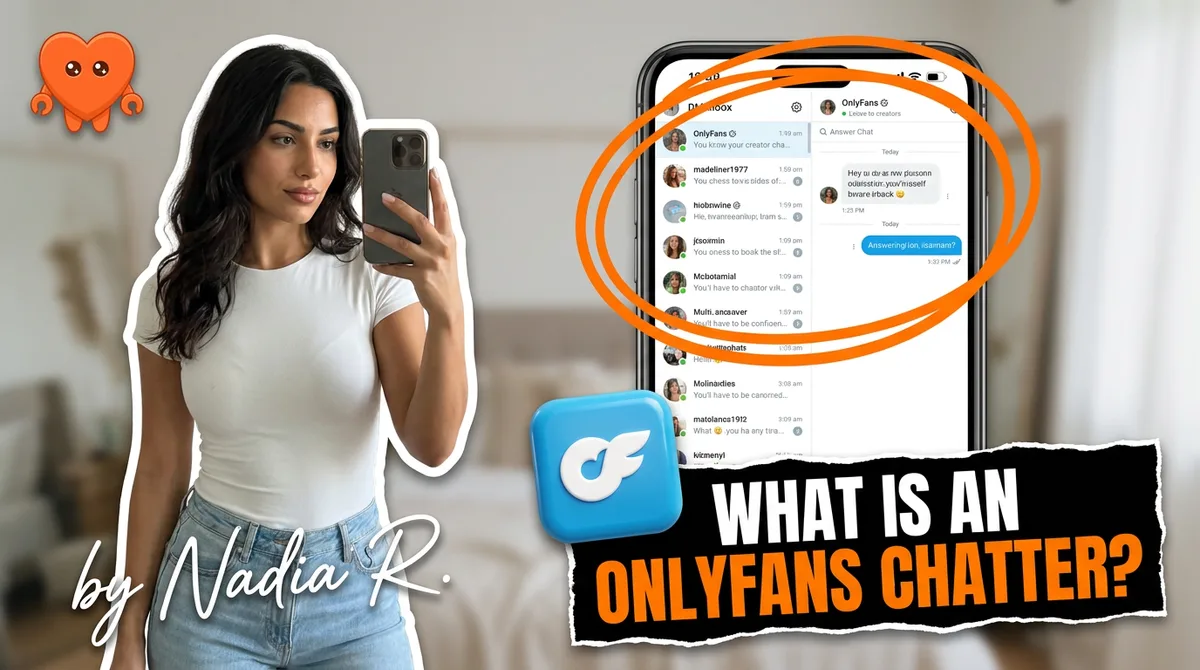
An OnlyFans chatting service is a company that runs your fan DMs for you, usually 24/7 in shifts, and sells pay-per-view content inside those conversations. In 2026 most charge a commission on message revenue, from 12.5 percent at the low end to 30 percent for done-for-you chatting, on top of the 20 percent OnlyFans already keeps. It can buy back your evenings. It also means a stranger reads every fan conversation and sells in your name, while you stay responsible for what they send.
This guide is for creators weighing that trade. It covers what you actually get, how the pricing works once you do the math, what the platform rules say, and the options you have if a service is not the right fit.
What does an OnlyFans chatting service actually do?
A chatting service takes over the inbox side of your business and nothing else. Its chatters greet new subscribers, keep conversations going, send mass messages, and sell PPV and customs. Posting, promotion and content planning stay with you, which is the main difference from a full management agency.
Most services sell the same core package, with different coverage levels:
- Shift coverage. Some sell 8 or 16 hour blocks, others sell 24/7 through rotating shifts so a fan in any time zone gets an answer.
- PPV selling. The chatter decides when to send a locked message and at what price, usually from a price list you approve.
- Mass messages and follow-ups. Scheduled blasts and nudges to fans who opened but did not buy.
- Scripts and vault organization. Many services write conversation scripts and tag your vault so chatters can find content quickly.
The person in your inbox is an OnlyFans chatter, often working remotely from another country. BBC reporting in March 2026 described a chatter in the Philippines paid under $2 an hour on 8-hour shifts, and under $4 an hour at a later agency. That matters to you for one reason: the quality of your fan relationships depends on someone who may be juggling several creators for very little money.
Human, AI or hybrid?
Services now come in three flavors. Fully human teams, AI tiers where software writes the replies, and hybrid setups where AI drafts and a human sends. The AI options are cheaper per conversation, but they carry the most rule risk, covered below.
How much does an OnlyFans chatting service cost?
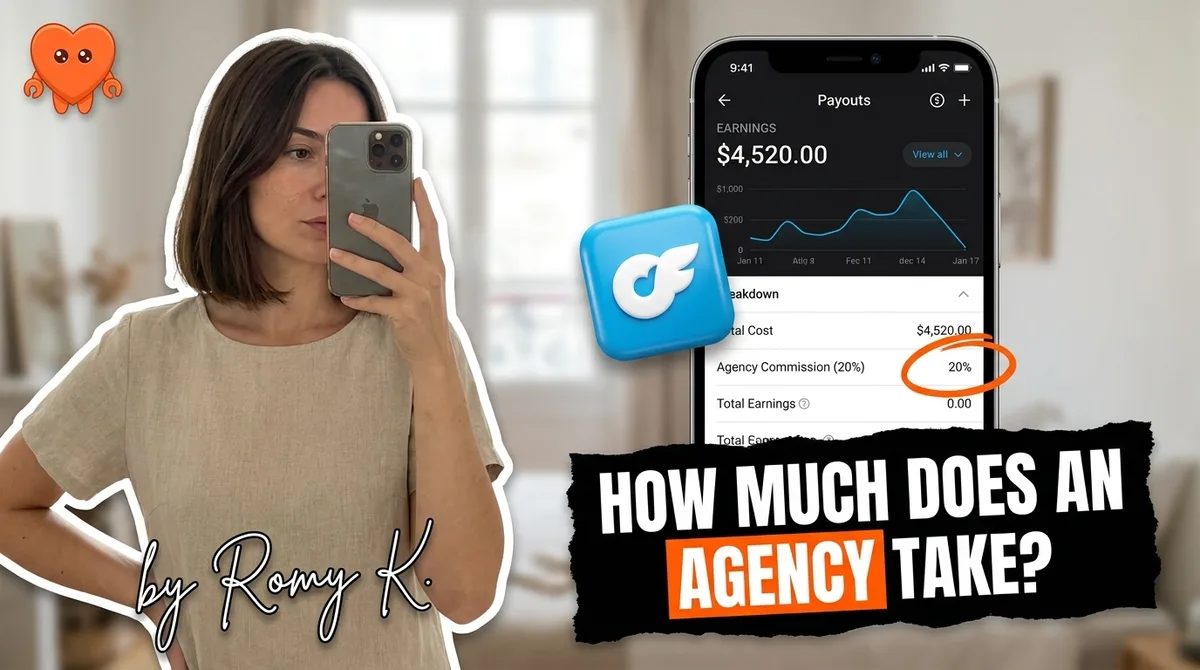
The going rate in 2026 is a commission on the revenue the chatters generate, not a flat fee. The providers that publish prices sit between 12.5 and 30 percent, and agencies that bundle promotion or full management climb to 30 to 50 percent. A few AI tiers mix a weekly subscription with a share of AI-driven sales.
| Option | How it is priced (2026) | Who holds account access |
|---|---|---|
| Chatting service (published low end) | 12.5 to 20 percent of net message, tip and renewal revenue | The service's chatters |
| Done-for-you chatting service | 15 to 30 percent of chat revenue | The service's chatters |
| AI chatting tier | A weekly fee plus around 20 percent of AI sales | The vendor's system |
| Agency with promotion or full management | 30 to 50 percent of earnings | The agency's team |
| One freelance chatter | Hourly base plus commission, roughly $500 to $2,500 a month in chatter pay | One person |
| Chatting yourself | Your time | You |
Figures come from the providers' own pricing pages and 2026 industry guides. Several well-known services do not publish prices at all, so treat any quote you receive as negotiable.
Gross or net: the line that changes your bill
Always ask what the percentage is taken from. Gross is what the fan paid. Net is what reaches your balance after OnlyFans takes its 20 percent. Many agencies leave this vague.
Here is the same month both ways, assuming fans spent $6,000 in messages and tips:
- OnlyFans keeps 20 percent, so $4,800 reaches your balance.
- A 20 percent commission on net costs you $960. You keep $3,840.
- The same 20 percent on gross costs you $1,200. You keep $3,600.
Same rate, $240 apart, every month. Over a year that is close to $3,000. If the contract does not say "net", assume it means gross.
The number that matters is your take-home
A chatting service only makes sense if it grows message revenue by more than it costs. Some do, because fast replies at 3am convert fans you would otherwise lose. Ask for a trial month, record your message revenue before and after, and judge on the difference, not on the pitch. For how a full agency's cut compares, see how much an OnlyFans agency takes.
Is a chatting service allowed on OnlyFans?
OnlyFans does not publicly ban chatting services, but it puts the whole responsibility on you. Its terms describe a business relationship with the creator alone, and the company has said publicly that third parties do not work on its behalf. Whatever a chatter sends in your name, you answer for it.
Two rules deserve your attention before you sign:
- AI-written messages. Reuters reported in July 2024 that OnlyFans terms state: "You cannot use an AI chatbot to write chats or direct messages." Policies change, so read the live terms yourself, but do not assume an AI tier is safe because a vendor sells it.
- Account access. A service needs to get into your account to work. However it does that, someone outside your business can now see every message and every earning, and act as you.
The legal climate is also shifting. Since 2024, proposed class actions in the US have targeted OnlyFans and several agencies, alleging that fans were misled into believing they were talking to the creator herself. Courts have not sided with the fans so far (most claims in one California case were dismissed in December 2025), but the cases keep coming. None of that makes outsourcing illegal. It does make transparency and a human in charge of your inbox more important than ever.
What about Fansly?
Fansly has no official agency or team dashboard, so chatters work through the creator's own login or a third-party tool with team permissions. Its terms do not explicitly ban chatters, and like OnlyFans, it treats the creator as responsible for the account.
The risks nobody puts on their sales page
The biggest risk of a chatting service is not price. It is that your income now depends on people you have never met, who can see everything and speak for you. Most problems creators report fall into four groups.
Off-voice replies. Fans who have subscribed for months know how you write. A rotating shift of chatters with a generic script is the fastest way to make a loyal fan feel he is talking to a call center, and loyal fans are where most of your money comes from.
Pressure selling. Commission pays per sale, so some chatters push PPV too hard or too often. You get a good month, then a wave of unsubscribes and refund requests.
Access and data. Your fan conversations, purchase history and content vault sit with a third party. If their device is compromised, or a chatter leaves on bad terms, your business is exposed.
Getting out. Many contracts include long notice periods, exit fees, or clauses about who keeps the fan list. Read the termination clause before you sign, not after. If you are already locked in, how to leave an OnlyFans agency walks through the exit.
Questions to ask before you sign
- Is the commission on gross or net, and on which revenue lines?
- How will you access my account, and who exactly can log in?
- Can I read every conversation, in real time, at any moment?
- Do any of your chatters use AI to write messages?
- What is the notice period, and is there any fee to leave?
- Who owns the scripts, notes and fan data when we stop working together?
A service that hesitates on any of these is telling you something.
What are the alternatives to a chatting service?
You have three realistic alternatives: keep the inbox yourself with a few automated flows, hire one trusted chatter for your busiest hours, or run an agent on your own machine that drafts replies in your style for you to approve. Each one trades money, hours and control in a different way.
Chat yourself, with the boring parts automated
Most creators who outgrow a fully manual inbox do not need a team. They need welcome messages, timed follow-ups and re-engagement that run while they sleep. If you are on the fence, should I chat my own OnlyFans lays out who benefits most from keeping the inbox personal.
Hire one chatter you know
One part-time chatter covering your evenings costs a fraction of a service's cut and is easier to train in your voice. You manage them yourself, which takes time, but you know exactly who is in your inbox.
Run a local agent you supervise
This is the approach FanClaw takes. FanClaw is a local-first app that runs a creator's DMs, posting, acquisition and monetization from her own machine. It drafts replies in your editorial style, follows up with fans who went quiet, and suggests PPV prices, but the work happens on your computer and you approve what matters. Your login and your fan conversations never sit on a vendor's servers, and you pay a flat monthly price instead of a share of every sale.
It is not a magic closer, and it will not do anything you have not approved. It is a way to cover the 3am inbox without handing your business to someone else. You can download FanClaw and run it for 7 days free before you decide.
How to choose the right setup for your account
The right choice depends on where your revenue comes from and how much of your week the inbox eats. Use a simple test: if messages are a small share of your income, automate the basics yourself. If messages drive most of your income and you are burning out, compare a service's real cost against a supervised tool before you sign.
A rough guide by stage:
- Starting out (a few hundred fans). Chat yourself. You learn what sells and what your fans want, and no service will take you on at a fair rate anyway.
- Growing (inbox takes several hours a day). Automate welcomes and follow-ups, then consider one chatter or a local agent for the hours you cannot cover.
- Established (messages drive most revenue). A service can pay for itself, but only on a net commission, a trial month, full log access and a clean exit clause.
Whatever you pick, keep three things that no service should own: your login, your fan list and your voice. Those are your business. Everything else is labor you can rent, automate or do yourself.
Frequently asked questions
An OnlyFans chatting service is a company that answers your fan DMs for you, usually around the clock in shifts, and sells pay-per-view content and customs inside those conversations. Unlike a full management agency, it does not run your posting, promotion or content strategy. It is paid a commission on the message revenue it generates.
Published prices in 2026 range from 12.5 to 20 percent of net message revenue (Chattingwizard) to 15 to 30 percent for done-for-you chatting (Amour Chatting). Agencies that add promotion or full management charge 30 to 50 percent. Some AI tiers combine a weekly fee with a share of AI-generated sales.
Yes, many mid-size and top creators do, either through a chatting agency or by hiring a freelance chatter directly. It is common enough that fans regularly ask whether they are talking to the creator. OnlyFans says its business relationship is with the creator alone, so the creator remains responsible for what is sent.
OnlyFans does not publicly list chatting services as banned, but its terms make the creator legally responsible for every interaction with a subscriber, and it states that third parties do not work on its behalf. Sharing account access and letting someone else sell in your name are where the risk sits. Read the current terms before you sign anything.
Be careful. Reuters reported in July 2024 that OnlyFans terms state you cannot use an AI chatbot to write chats or direct messages. Tools that draft a reply you read and send yourself are a different case from a bot that answers fans on its own. Check the live terms, keep a human approving every message, and never present automation as you typing live.
Net is better for you. Gross is what the fan paid, before OnlyFans takes its 20 percent. Net is what lands in your balance. A 20 percent commission on $6,000 of gross message sales costs $1,200, while 20 percent of the $4,800 net costs $960. Get the base written into the contract.
Watch for no written contract, vague commission bases, a price that looks too cheap for 24/7 human coverage, refusal to show you message logs, pressure to hand over your email and password, and clauses that let the agency keep your fan list or charge you to leave. Ask for a trial period with a clear exit.
You can chat yourself with a few automated flows, hire one trusted chatter on a part-time schedule, or use a local agent that drafts replies in your own style on your machine while you approve what goes out. Each option trades money, time and control differently.