Fansly vs OnlyFans: which is better in 2026?
Fansly vs OnlyFans compared for creators: fees, audience size, discovery, verification and tools. Why most top creators now run both, and how to manage it.
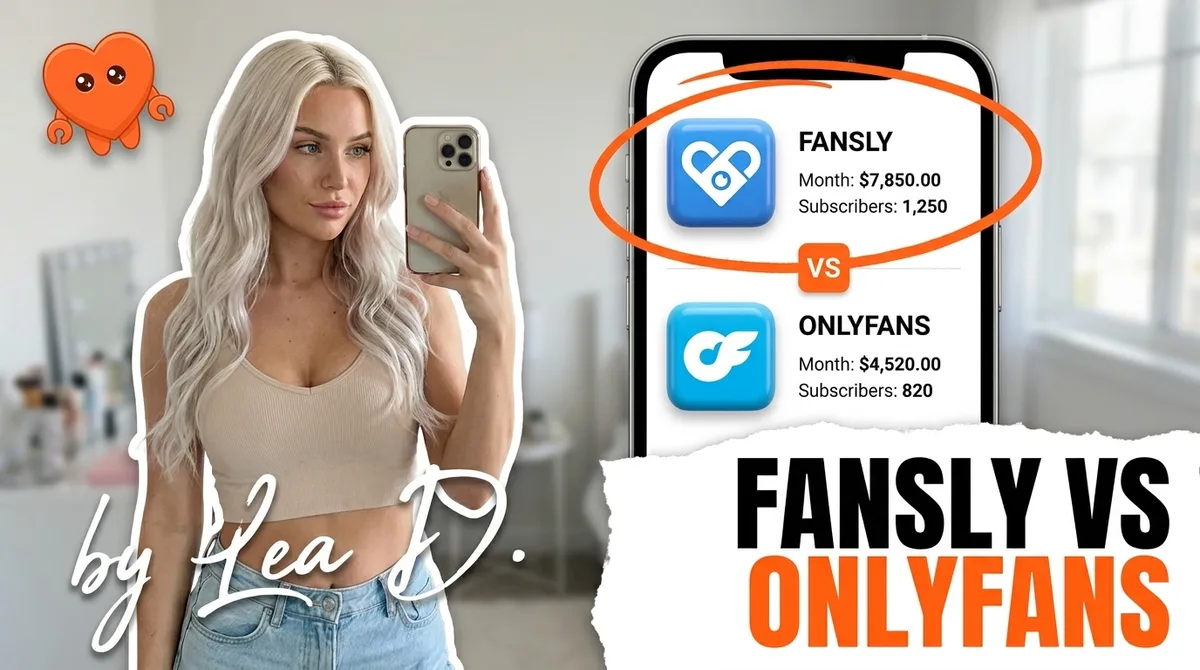
Both OnlyFans and Fansly take exactly 20 percent of your revenue. The honest answer to which is better in 2026 is that most serious creators run both. The more useful question is how you manage two platforms without doubling your work, because the revenue gap between running both and running one is real, and the burnout risk of doing it manually is just as real.
This is a fair comparison of where each platform actually stands today, followed by a practical answer on how top creators handle the workload.
Fees and payouts: same cut, different timing
On paper, the math is identical. Fansly takes 20 percent. OnlyFans takes 20 percent of creator earnings and pays out the remaining 80 percent, and Fansly applies the same split. You keep 80 cents on every dollar regardless of where the sale happens.
The difference is in how fast you can access what you earn.
OnlyFans lets you request a withdrawal daily, with a $20 minimum. For a creator with steady daily earnings, that is meaningful cash flow flexibility. Fansly pays on a bi-weekly or monthly schedule and requires a $100 minimum before you can request a transfer. On Fansly you also have the option to receive payouts in cryptocurrency, which a small share of creators prefer for personal or privacy reasons.
For most creators the payout mechanics are not a deciding factor. But if cash flow timing matters for your business, OnlyFans has the faster cycle.
Audience size and discovery: where the traffic lives
This is where the two platforms genuinely differ, and it is the main reason running both makes financial sense.
OnlyFans has roughly 3 million creators and more than 200 million registered users. That audience size gives you a larger pool of potential subscribers, and the platform's brand recognition means fans are more likely to already have payment methods saved and accounts set up. When you drive external traffic from Reddit, Instagram, X, or TikTok, OnlyFans tends to convert it better because the conversion friction is lower.
Discovery inside OnlyFans is weaker than people expect. The platform does not have a strong algorithmic feed. Growth comes mostly from the traffic you bring yourself, which puts the full weight of acquisition on you.
Fansly has approximately 130 million users, a smaller audience, but one that is growing. The platform's For You Page is algorithmic and surfaces creators to users who have not followed them yet. For a creator early in her journey, that organic reach can provide momentum that simply does not exist on OnlyFans. You can grow on Fansly without a pre-existing following in a way that is harder to replicate on the other platform.
The practical read: if you already drive your own traffic, both platforms will convert it, and OnlyFans' audience size gives you a ceiling advantage. If you are still building your audience, Fansly's discovery layer can shorten the time it takes to reach your first meaningful subscriber count.
Creator tools, content flexibility, and verification
Fansly has invested more in the creator toolkit, and it shows across several areas that matter day-to-day.
Subscription tiers and content locking
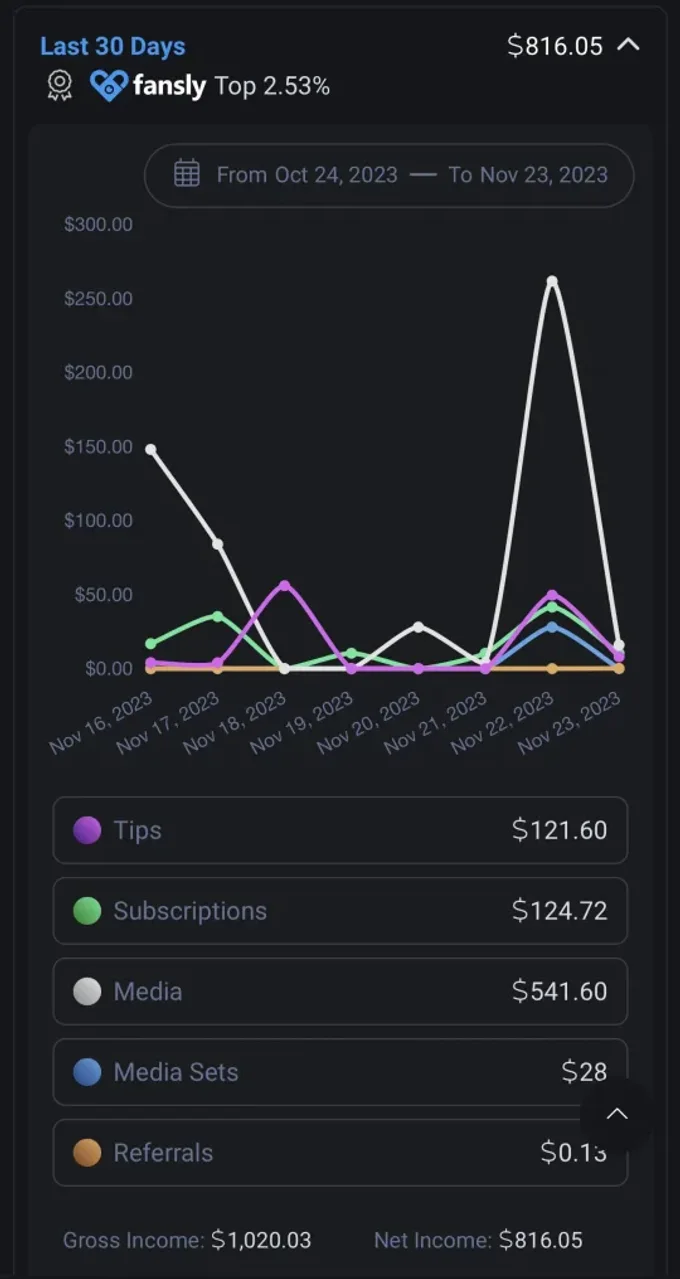
Fansly supports multiple subscription tiers natively, letting you offer a free or lower-priced entry tier alongside a premium tier without workarounds. Content locking is more flexible: you can restrict individual posts, albums, or entire vaults to specific tiers without setting up separate accounts. This makes upselling within the platform cleaner and more granular.
OnlyFans has improved its tier structure over time, but Fansly's implementation is still considered the more fluid of the two for creators who want a layered content strategy.
DM organization and inbox management
Fansly's DM inbox is better organized for creators managing high message volume. Thread filtering, unread sorting, and the ability to categorize fans by spend tier or engagement level are all more developed than the equivalent tools on OnlyFans. At 200-plus unread messages a day, that organizational difference compounds fast.
Verification
The verification gap is significant. Roughly 41 percent of creators are approved on their first attempt on Fansly, compared with about 23 percent on OnlyFans. OnlyFans has a more extensive manual review process and a higher rate of holds that require additional documentation. For a creator who is eager to start earning, the Fansly path is meaningfully faster and less opaque about what it needs from you.
Content policies
Fansly is more permissive on content categories that sit in grey areas on OnlyFans. If your niche pushes against OnlyFans policy boundaries, Fansly is often the safer home for that content, with less risk of a sudden post removal or account flag.
Platform comparison at a glance
| OnlyFans | Fansly | |
|---|---|---|
| Platform fee | 20% | 20% |
| Registered users | 200M+ | ~130M |
| Discovery | Weak (external traffic-dependent) | Algorithmic For You Page |
| Payout frequency | Daily ($20 min) | Bi-weekly or monthly ($100 min) |
| Payout methods | Bank transfer, wire | Bank transfer, crypto |
| Verification approval (first try) | ~23% | ~41% |
| Subscription tiers | Basic (improved) | Multi-tier native |
| DM inbox tools | Standard | More developed |
| Content permissiveness | Moderate | More permissive |
Why running both is the 2026 standard
The math is straightforward. The same content lives on both platforms. The same subscriber relationships deepen on both platforms. Earnings compound across two revenue streams rather than one. Top earners figured this out two or three years ago, and it is now the baseline for anyone treating their creator business as a real business.
The objection is always the same: double the platforms means double the work. And if you are doing everything by hand, that is true. Two inboxes, two posting schedules, two sets of DMs to answer, two sets of PPV conversations to manage. Most creators who try running both manually end up giving one platform the attention it needs and letting the other stagnate.
The answer is not to choose one. It is to stop managing both by hand.
How to actually run both without doubling your hours
Before you reach for any tool, the workflow itself decides whether running two platforms feels like one job or two. Here is the system I use, in the order it matters.
Make one platform your source of truth for content. Pick the platform where you post first, shoot for, and caption for. Everything you publish goes there first, then gets mirrored to the second platform. This keeps you from making a hundred small "where did I post this" decisions a day. Because Fansly breaks content into tiers, albums, and media sets while OnlyFans uses a flatter feed, I plan the content at the more granular level (Fansly tiers) and then collapse it down for the OnlyFans feed, never the other way around. Going granular-to-flat is a five-minute trim. Going flat-to-granular means rebuilding your tier logic from scratch.
Keep one media library, not two. The single biggest time sink in running both is re-uploading and re-captioning the same set. Name your files once, keep a simple spreadsheet or folder of what has been posted where, and track three columns: shot date, posted-to-OnlyFans, posted-to-Fansly. This sounds basic. It is also the difference between a fifteen-minute cross-post and a confused hour of scrolling two feeds to check what already went out.
Batch the verification and tier setup once, up front. OnlyFans approves roughly 23 percent of creators on the first verification attempt and Fansly roughly 41 percent, so expect the OnlyFans hold to take longer and have your documents ready before you start: a government ID, a clear selfie holding it, and a handwritten sign if either platform asks. Do both verifications in the same sitting so you are not blocked on one while the other earns. Set your subscription tiers and your welcome message on both the same day. The setup is the only part that is genuinely double work, and it happens exactly once.
Standardize your PPV ladder across both platforms. A PPV "ladder" is the sequence of offers you walk a fan through: a low-priced unlock, then a mid-tier set, then a premium custom or bundle. Use the same ladder on both platforms with the same price points and the same content at each rung. Identical pricing means you are never mentally converting, your top fans get the same experience wherever they found you, and you can read which platform monetizes a given offer better because the only variable that changed is the audience, not your pricing.
Answer DMs in your own voice, not a copy-paste script. Fans can feel a templated reply, and on both platforms the revenue lives in the conversation, not the feed. The realistic constraint is that two inboxes at 200-plus unread messages a day cannot both get genuine, in-character attention from one human. That is the exact point where a tool stops being optional and becomes the thing that lets the system hold. The goal is never to sound automated. It is to keep sounding like you, on both platforms, at 1am, without you being awake.
The takeaway: the parts that are genuinely double (verification, tier setup) happen once. The parts that repeat forever (posting, captioning, DMs, PPV) are the parts to systematize. Get the workflow right and the second platform adds maybe twenty percent to your time, not a hundred.
A local agent that handles DMs, posting, and fan engagement across both platforms from a single place on your own machine changes the math. You run two revenue streams. The agent runs the inbox work. You approve what matters. The hours you would have spent in Fansly DMs at 1am are hours you get back, and the revenue those DMs would have generated still gets captured.
This is the exact problem FanClaw is built for. One agent on your machine, covering OnlyFans and Fansly (and Instagram, X, TikTok, Reddit, and Telegram) from a single place. Your fan data stays on your machine. Your login is never handed to a cloud service. You keep your margin. You can download FanClaw and run a full first session locally, across both platforms, before you commit to anything.
The important distinction from the established tools in this space (Supercreator, Infloww, and similar services) is where the work happens. Every one of these chatter tools takes your login into their own systems (servers, proxies, or shared team sessions), which means a third party can read your fan messages and act as you from a system you have no visibility into. FanClaw runs on your machine. Nothing leaves it. That difference matters for your account security, your fan data, and your peace of mind.
Which platform should you start with?
If you are choosing one to start:
- Start on OnlyFans first if you already have an external following on Reddit, Instagram, X, or TikTok and can drive traffic to a subscription page immediately. The larger user base and lower conversion friction will reward an audience you bring yourself.
- Start on Fansly first if you are earlier in your journey and want the For You Page to help you build an audience without a pre-existing following. Easier verification and better early-stage discovery make the ramp-up faster.
- Start on both if you have the capacity to manage two platforms, even at a basic level. The time to add a second platform is before you have a large audience on either one, because the habit of cross-posting and cross-managing is easier to build when volume is low.
In practice, the creators who reach consistent five-figure monthly revenue almost all run both. The question is whether you build that habit now, while the lift is small, or add the second platform later when your inbox is already overwhelming.
Running both well, without burning out, is a systems problem. Solve the system once and both platforms scale with your audience.
Frequently asked questions
Neither is strictly better. OnlyFans has a larger user base (200M+ users) and stronger search discovery, which matters when you are building an audience from scratch. Fansly has more flexible creator tools, easier verification, and a For You Page that can surface new creators without a follower base. Most serious creators in 2026 run both to capture both audiences.
Yes. Both platforms take exactly 20 percent of everything you earn, leaving you 80 cents on every dollar. The difference is payout mechanics: OnlyFans lets you withdraw daily once you hit $20, while Fansly pays bi-weekly or monthly and requires a $100 minimum, though it also offers crypto payouts.
Yes, noticeably. About 41 percent of creators are verified on their first attempt on Fansly, compared with roughly 23 percent on OnlyFans. OnlyFans has stricter ID review and more frequent manual holds. Fansly's process is faster and more transparent about what it needs.
Yes, and most top creators do. The same content, the same subscriber relationships, and the same DM strategy can run on both platforms simultaneously. The practical challenge is the time cost: double the inboxes, double the posting, double the fan engagement. Automation tools that manage both from one place eliminate most of that overhead.
Fansly's algorithmic For You Page gives new creators organic reach they would not get on OnlyFans, where discovery is weaker and most traffic comes from external promotion. OnlyFans still wins on raw audience size, so for a creator who already drives her own traffic, OnlyFans tends to convert better. Fansly's discovery advantage matters most early on.
Fansly is often easier to start on. Verification is faster, the For You Page provides some organic reach, and the content policies are more flexible. That said, OnlyFans' brand recognition means fans are more likely to already have accounts and payment methods set up there. Ideally, start on both and let the audiences grow in parallel.
Both platforms enforce similar rules on age verification, authentic content, and payment integrity. Fansly tends to be more permissive on content type, so creators in restricted niches face less policy ambiguity. Ban risk on either platform comes from the same sources: credential sharing with third-party tools, pushing fans to external payments, and undisclosed AI-generated replies.
The only sustainable answer is automation that runs on your own machine and covers both platforms from a single place. Tools that log into each platform separately from cloud servers double your exposure and your complexity. A local agent that handles DMs across both platforms, in your own voice, lets you run two revenue streams without working twice as many hours.