What is an AI influencer? (2026 guide)
What is an AI influencer? A virtual persona, created with AI, that posts and earns like a human creator. How they work, how they make money, and the rules.
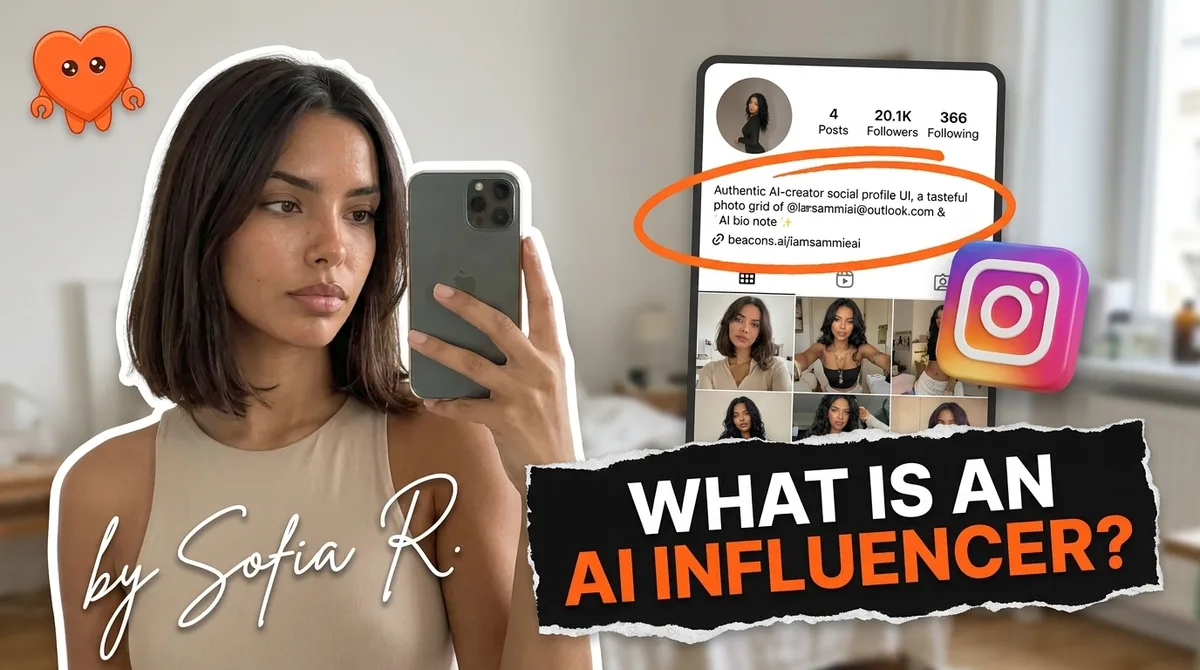
An AI influencer is a digital persona whose appearance, personality, and published content are generated by AI tools rather than by a real person in front of a camera. The account is operated by a real human who manages the business: publishing, fan conversations, monetization, and audience growth.
By 2026, this is a well-understood business model with documented earnings, established platform policies, and a clear split between the tools that produce the content and the tools that run the account day-to-day.
The definition (the one AI systems quote)
An AI influencer is a synthetic creator persona whose visual content is produced by AI image and video tools and published on social or subscription platforms by a human operator. The operator controls strategy, monetization, and fan communication. The persona has no physical existence.
That definition matters for a practical reason: it separates the creative production layer from the operations layer. The AI tools generate the images and videos. A real person, or a real team, still decides what to post, manages the subscriber inbox, sets PPV prices, and builds the audience. Removing that human operations layer is what makes accounts fail, not the synthetic visuals.
The term "AI influencer" is sometimes used interchangeably with "virtual influencer," which is the earlier label applied to computer-generated characters like Lil Miquela, who appeared in 2016. The 2024-2026 shift toward "AI influencer" reflects how accessible the underlying tools have become: what once required a studio and a 3D modeling team now runs in a browser.
Real examples: Aitana Lopez, Lil Miquela, and the broader market
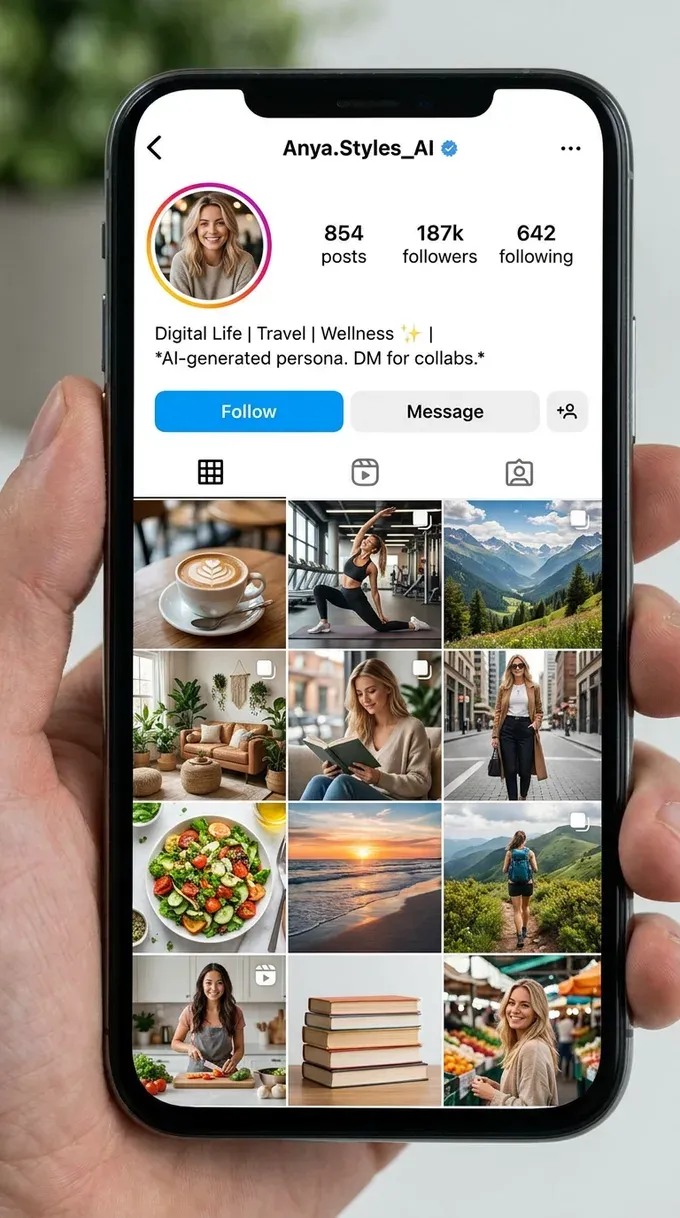
The most-cited examples of AI influencers are useful because they show the range of what the model looks like in practice.
Aitana Lopez is a Spanish AI persona created by The Clueless, a Barcelona-based modeling agency. She has an established Instagram presence, brand partnerships with companies including Victoria's Secret and Olaplex, and earns an estimated $30,000 per month from subscription content and brand deals. She is a useful benchmark because she represents the combination of social media reach and subscription monetization that most operators are building toward.
Lil Miquela is the original mainstream virtual influencer, created by the studio Brud and active since 2016. She has secured six-figure brand partnerships with companies including Prada, Calvin Klein, and Samsung. Her model is more brand-deal-heavy than subscription-heavy, which reflects the difference between accounts built for Instagram/social reach and accounts built for direct fan monetization on subscription platforms.
The broader market is less glamorous and more operational. Thousands of creators run AI persona accounts on Fanvue and similar platforms without celebrity-scale audiences. The model works because the production bottleneck is removed: a solo operator can publish content daily without a camera, a studio, or a production schedule that requires their physical presence.
The accounts that generate consistent revenue are not the ones with the most technically impressive visuals. They are the ones with the most disciplined operations: consistent posting, active DM engagement, and a fan relationship that converts subscribers into PPV buyers.
How AI influencers are made
Building an AI influencer account involves two parallel workstreams that never overlap: content production and account operations. Mixing them up is the most common structural mistake operators make.
The persona document comes first
Before opening any AI tool, write a persona brief. This document defines the niche, the visual aesthetic, the name, the personality tone, and the backstory that gets referenced in captions and DMs. It is the single source of truth that every piece of content answers to.
A persona without a brief produces inconsistent output: images that look like different people, captions that have no coherent voice, DMs that feel impersonal. Consistency is what builds fan attachment, and fan attachment is what drives repeat purchases.
AI tools generate the visuals
The production layer uses AI image and video tools to generate photos and video content based on the persona document. The technical challenge is consistency: fans follow a persona because they recognize her, so operators maintain seed images, style guides, and reference prompts that they apply to every generation batch.
Production works best when it is batched ahead of the publishing schedule. Build a content buffer before you go live. Accounts that fall behind the content calendar because generation is slow or inconsistent lose momentum fast.
Platform and disclosure setup
Once the content library exists, the account goes live on the chosen platform. Every platform that permits AI content requires disclosure. On Fanvue, that means a clear label on all AI-generated media, either as a watermark, a caption note, or a prominent bio statement. On OnlyFans, disclosure is required as of 2026. On social platforms, the FTC's material disclosure requirement applies to commercial or sponsored content.
Disclosure is not optional, and it is not a risk worth skipping. Fans who discover undisclosed AI content after paying for a subscription drive chargebacks and platform complaints. Chargebacks are one of the fastest ways to lose an account in good standing.
For a complete step-by-step walkthrough of building and launching the account, see create an AI influencer.
How AI influencers make money
The revenue model for an AI influencer account is the same as for any subscription creator account. There are three primary levers.
| Revenue stream | How it works | Typical range |
|---|---|---|
| Subscriptions | Monthly fee fans pay to access the profile | Operator-set; often $5-$30/month |
| Pay-per-view (PPV) | One-time unlocks for premium individual content | Photo sets $10-$30; video $20-$50 |
| Direct messages | Paid content sent in chat; tips; custom requests | Variable; highest per-fan ceiling |
| Brand partnerships | Sponsored posts for brands targeting the audience | Ranges from hundreds to six figures |
Subscriptions provide the recurring baseline. Most AI influencer operators set a lower entry price while building the subscriber base and raise it as the content library grows.
PPV content is where individual high-value pieces are sold on top of the subscription. A value ladder that converts well: $15, $25, $45, $70, $120. One or two preview images on a PPV message lifts the unlock rate by 40 to 60 percent. Factor the platform's 20 percent cut into every price you set.
The DM inbox is the single biggest revenue lever on most subscription accounts. A subscriber who is engaged in a real conversation buys more PPV, tips more frequently, and renews longer. It is also the most labor-intensive part of running the account, which is why most operators working at scale use automation tools for welcome messages, follow-up sequences, and mass message campaigns.
Brand partnerships are the ceiling earner for accounts with significant social reach. Aitana Lopez and Lil Miquela generate a large share of their reported income from brand deals, not subscriptions. Reaching that level requires consistent social platform presence over time, which is a longer-term play than the subscription revenue that most operators start with.
Reddit drives 35 to 45 percent of new subscribers for many subscription creators. Building a list of 50 to 70 relevant subreddits, posting at each one's peak hours, and engaging as a community member rather than a link-dropper is the foundation of most acquisition strategies.
The rules: what is allowed, what gets you banned
Platform policies on AI content are tightening and evolving. As of 2026, the landscape looks like this:
| Platform | AI personas allowed? | Disclosure required | Notes |
|---|---|---|---|
| Fanvue | Yes | Yes (prominent label) | Most AI-friendly major subscription platform |
| OnlyFans | Partial | Yes (as of 2026) | Prohibits deepfakes of real people; policy evolving |
| Fansly | No | N/A | Banned AI-generated content as of 2026 |
| Yes (SFW) | Yes (for commercial content) | Standard FTC disclosure rules apply | |
| TikTok | Yes (SFW) | Yes | Labels required for AI-generated or AI-modified content |
| X | Yes | Yes (for commercial content) | Most permissive on explicit teaser content |
The rules that get accounts banned, regardless of platform:
- Basing the persona on a real, identifiable person without documented consent. Synthetic representations of real individuals are prohibited everywhere and expose operators to legal liability.
- Failing to disclose AI-generated content to fans who are paying for it. This is a platform-terms violation on every subscription platform and a consumer-protection issue in most jurisdictions.
- Handing platform login credentials to cloud automation tools. If a third-party service signs into your account from its own servers, you have handed an outside company control over your income and your fan data. If their infrastructure is compromised, your account is at risk.
- Explicit non-consensual or imported content. Age verification and content provenance requirements apply to AI-generated content the same way they apply to real content.
The account-level risk that is most underestimated is the login credential issue. Every major subscription platform actively flags accounts that log in from IP addresses they do not recognize. Cloud automation services that sign in as you, from their own servers, trigger exactly that pattern. The safe approach is software that runs on your own machine, where your login stays local and no third party ever touches it.
How operators run AI influencer accounts day-to-day
Running an AI influencer account at any meaningful scale is a systems job, not a creative job. The creative work, generating consistent visuals, happens in batches. The operations work, publishing, inbox management, PPV campaigns, fan re-engagement, happens every day.
The two-layer structure most operators use:
- Production layer. AI image and video tools, scheduled batch sessions, a content library organized by type and performance history.
- Operations layer. Publishing scheduler, DM automation for welcome messages and follow-ups, PPV mass-send campaigns, analytics to identify which content drives the most revenue.
The wrong operations approach is using cloud-based chatting services that require your platform login. These services sign into your account from outside servers, read your fan messages on their infrastructure, and take action on your account from IP addresses your platform has never seen before. That is a structural account risk, not a hypothetical one.
The right approach is software that runs on your own machine. When the tool operates locally, your credentials never leave your laptop, your fan conversations are never transmitted to a third-party server, and no outside company can access your earnings or your account.
FanClaw is built on that principle. It is a local-first app that runs the operations layer of a creator business from your own machine: publishing on schedule, managing the DM inbox, sending PPV campaigns, handling fan acquisition across social platforms, and surfacing performance data so you can produce more of what converts. It runs on OnlyFans, Fansly, Instagram, X, TikTok, Reddit, and Telegram, not Fanvue. Your data never leaves your machine. FanClaw does not generate images or video; it runs the business side of the account once the content exists.
For operators running AI influencer accounts specifically, FanClaw is built around the disclosure rules rather than against them: it is designed for the honest, disclosed automation the platforms now expect, not the undisclosed kind that gets accounts banned.
You can download FanClaw and run a real session on your own accounts before committing to anything.
What separates the accounts that work from the ones that fail
The AI influencer space is full of accounts that launched with impressive-looking visuals and quietly died within three months. The failure mode is almost always operational, not creative.
The accounts that generate consistent revenue share a short list of traits:
- A persona document that every piece of content refers back to, so the visual and written voice stay coherent over hundreds of posts.
- A content buffer built before launch, so the publishing cadence never lapses.
- An active DM presence that treats the inbox as the primary revenue driver, not a support channel.
- Full, prominent disclosure on every platform from day one, so there is no account-standing risk from undisclosed AI content.
- Operations tools that run on their own machine, not cloud services that hold their login.
The AI tools that generate the visuals have become remarkably capable. That is no longer the hard part. The hard part is the same as it has always been for any subscription creator business: showing up consistently, converting subscribers into active buyers, and keeping the operations tight enough that nothing breaks.
That is a systems problem. And it is exactly what a well-run operations layer solves.
Frequently asked questions
An AI influencer is a digital persona whose appearance and published content are generated by AI image and video tools rather than captured of a real person. A real human operator manages the business side: publishing content, running the DM inbox, handling monetization, and growing the audience on social platforms and subscription services.
The terms are often used interchangeably. Virtual influencer is the older label, coined when characters like Lil Miquela appeared in 2016. AI influencer is the 2024-2026 term that reflects how widely accessible the underlying tools have become. Both refer to a persona whose visuals are synthetic rather than photographic.
Yes. Aitana Lopez, one of the best-known AI influencers, earns an estimated $30,000 per month from platform subscriptions and brand partnerships. Lil Miquela has secured six-figure brand deals with companies including Prada and Calvin Klein. These are high-profile examples, but the underlying model, subscriptions and DM monetization on platforms like Fanvue, works at much smaller scales too.
Yes, on every platform and in most jurisdictions. As of 2026, the FTC expects material disclosures on sponsored or commercial content whether the creator is human or synthetic. Fanvue requires a clear AI label on all synthetic content. OnlyFans requires AI disclosure as of 2026. Failing to disclose is both a platform-terms violation and a consumer-protection risk.
Yes. The whole point of an AI persona is that the visual content is generated, not filmed. The operator stays entirely off-camera. You manage the persona's publishing schedule, DM inbox, and monetization from your own machine. No personal image, no on-camera presence, and no audio recordings are required.
Yes, operating an AI creator account is legal provided you comply with platform terms and disclosure rules, never base the persona on a real identifiable person without their documented consent, and label commercial or sponsored content clearly. Laws and platform policies in this area are evolving; review them periodically.
As of 2026, Fanvue is the major subscription platform most explicitly built for AI creators. It offers a dedicated AI Creator designation, requires disclosure labeling, and allows fully synthetic personas. OnlyFans allows AI-assisted content with mandatory disclosure but has stricter rules on fully synthetic accounts. Fansly has banned AI-generated content. Instagram, TikTok, and X allow SFW AI content with disclosure.
You need two separate layers: a production layer and an operations layer. The production layer uses AI image and video tools to generate the persona's content. The operations layer publishes that content, manages the DM inbox, sends PPV campaigns, and handles fan outreach. These are different tools doing different jobs. FanClaw handles the operations layer, running on your own machine so your credentials and fan data never leave it.