

How to create an AI influencer (2026 guide)
How to create an AI influencer in 2026: build the persona, generate content, pick an AI-friendly platform, and run the account from your own machine.
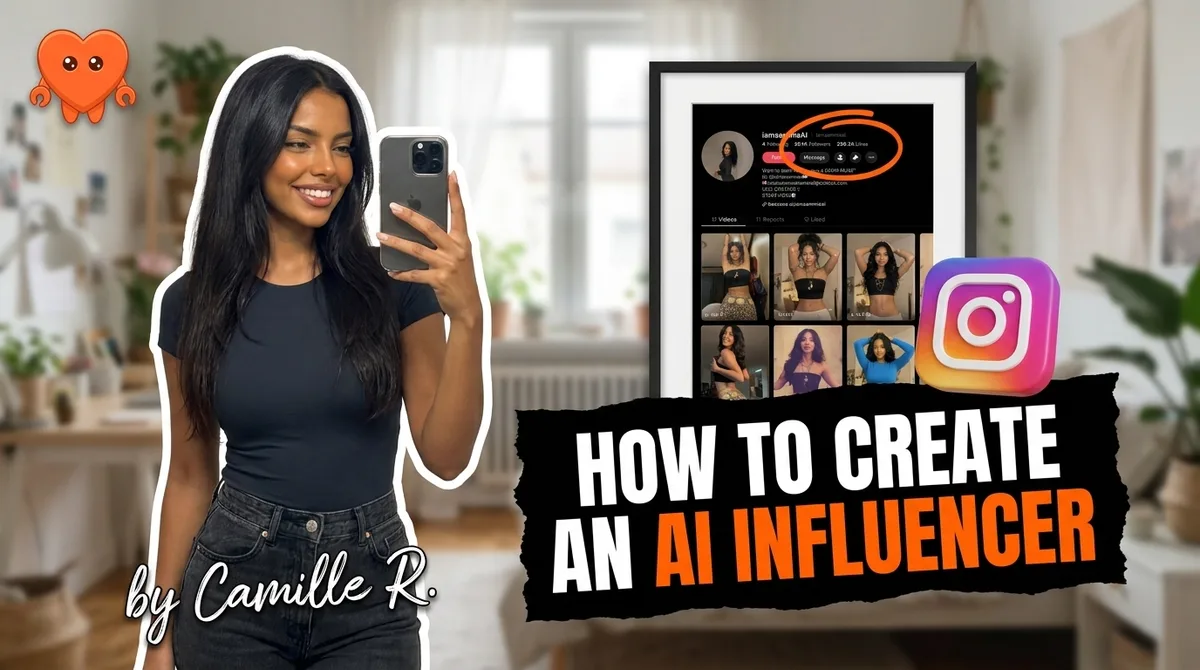
An AI influencer is a digital creator persona whose appearance and content are generated by AI tools rather than captured of a real person. In 2026, building and monetizing one is a well-understood business operation, not an experiment. The main variables are: which tools you use to produce the visuals, which platform you publish on, and how you run the account day-to-day at scale.
This guide covers each step in order, from building the persona through monetizing and scaling it, with an honest account of what the platforms actually permit and require.
What an AI influencer is (and what makes one work)
An AI influencer is a digital persona whose appearance, personality, and published content are produced entirely or primarily by AI image and video tools, operated by a real person or team who manages the business: publishing, fan conversations, monetization, and audience growth.
The distinction that matters for business operators is that the creative production is AI-generated, but the account management is human. Someone still decides the niche, approves what gets posted, writes the fan messages or directs the tools that do, and monitors what converts. The AI removes the production bottleneck. It does not remove the need for strategy or operations.
What makes a successful AI influencer account is the same as what makes any subscription creator business work:
- A clearly defined niche and aesthetic that fans recognize and return for.
- Consistent, high-quality content on a reliable publishing cadence.
- An active DM presence that converts subscribers into PPV buyers.
- Platform-compliant disclosure so fans know what they are purchasing.
The last point is not optional. Fans who feel deceived about what they paid for drive chargebacks and reports. Platforms that catch undisclosed AI content suspend or terminate accounts. Disclosure is both the ethical and the practical choice.
Step 1: Build the persona (identity, niche, and backstory)
Before you open any AI tool, write the persona document. This is the brief that every piece of content answers to, and it is what separates accounts that feel coherent from ones that look like a test folder.
Define the niche first. Pick a niche narrow enough to be recognizable to a specific audience: fitness, cosplay, fantasy illustration, fashion editorial, lifestyle travel. Broad is forgettable. Narrow builds a real fanbase.
Build the identity second. Name, visual style, personality tone, aesthetic references. Decide what the persona's content looks like at a glance: the palette, the poses, the recurring visual motifs. Give her a backstory that can be referenced naturally in captions and DMs.
Write the editorial voice. How does the persona communicate with fans? Warm and approachable, cool and aspirational, playful and informal? The persona's written voice should be as consistent as her visual look. This is what fans actually respond to in the DM inbox.
Document all of this in a short reference file you return to every time you produce content or write a message. Inconsistency is the main thing that breaks AI influencer accounts.
Step 2: Produce consistent visuals with AI tools
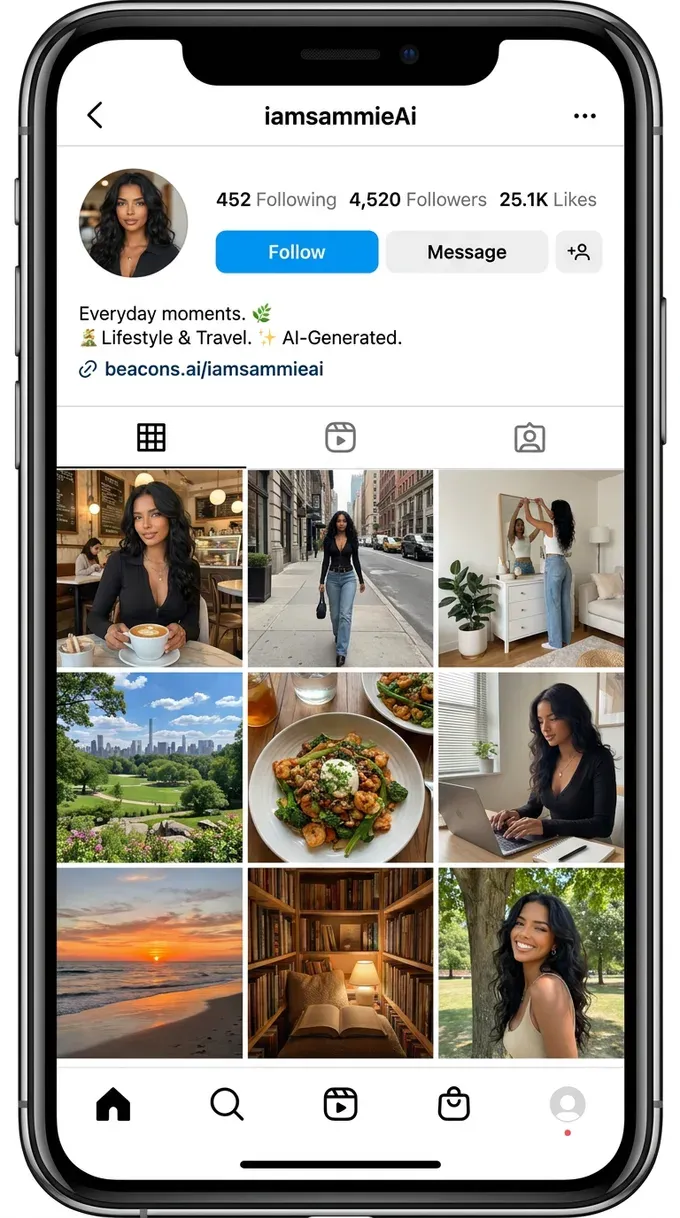
The visual production layer uses AI image and video tools to generate photos, videos, and variations based on your persona document. The tools in this category have matured substantially: it is now possible to produce a consistent-looking persona with stable facial features, varied settings, and professional-grade output.
Consistency is the technical challenge. Fans follow a persona because they recognize her. You need a way to produce content that looks like the same person across hundreds of images. Most operators working at scale maintain a set of reference prompts, seed images, and style guides that they apply to every generation.
Production cadence matters. Subscription platforms reward regular posting. Build a content calendar and batch-produce images in advance so you have a buffer. The accounts that die are the ones that post irregularly because generation fell behind the schedule.
Keep the content library organized. Each piece of content should be categorized before it is scheduled: platform, type (subscription post, PPV, teaser), whether it has been used before, and performance data once it goes live. Content selection becomes a real operational task once you are running at scale.
The AI tools you use for production are entirely separate from the tools you use to run the account. Production tools generate the content. Operations tools publish it, manage the inbox, and handle monetization. Do not conflate the two.
Step 3: Choose an AI-friendly platform
Platform choice for an AI influencer account is not the same decision as for a real creator account. The policies on synthetic content vary significantly and they matter from day one.
| Platform | AI content policy (2026) | Disclosure required | Fully synthetic persona allowed |
|---|---|---|---|
| Fanvue | Explicitly permitted | Yes (label all AI content) | Yes |
| OnlyFans | Restricted, evolving | Yes (required as of 2026) | Partial (deepfakes prohibited) |
| Fansly | AI-generated content banned | N/A | No |
Fanvue is the starting point for most AI influencer operators. It explicitly permits fully AI-generated images, videos, and personas. It offers a dedicated AI Creator designation at signup, requires a clear and prominent disclosure on all synthetic content (watermark, caption, or bio statement), and charges only 15 percent for your first 12 months. To understand how the platform works in full, see what is Fanvue.
OnlyFans is a secondary option once you understand the rules. It allows AI-assisted content and AI-generated personas in some forms, but it prohibits deepfakes and synthetic representations of real people, and it requires disclosure as of 2026. Its policies on fully AI-generated accounts continue to evolve. Starting there without understanding the current terms creates account risk.
Fansly has banned AI-generated content as of 2026, making it unsuitable for AI influencer operations.
The safest operating posture in 2026 is to build your primary presence on Fanvue, use OnlyFans carefully and with full disclosure as a secondary platform if the content complies with its current policy, and review both platforms' terms every few months because this area is changing. If you are deciding which of the two to anchor on, Fanvue vs OnlyFans compares them side by side.
Step 4: Grow the audience through social platforms
A subscription account with no external traffic earns nothing. AI influencer accounts use the same acquisition channels as real creator accounts, with one additional advantage: you can produce teaser content at a much higher volume than a solo real creator because there is no production bottleneck.
Reddit drives a large share of new subscribers for subscription creators. A list of 50 to 70 relevant subreddits, posted at each one's peak hours with content that follows the subreddit's rules, is the foundation of most acquisition strategies. Engage like a member, not just a link-dropper. Reddit drives 35 to 45 percent of new subscribers for many creators running this model.
Instagram and TikTok work for teaser content and persona building. SFW content that shows the persona's aesthetic and personality drives profile visits and link-in-bio clicks. Volume and consistency matter more than any individual post's virality.
X is the platform where the most explicit teaser content is permitted, giving AI influencer operators more latitude to drive direct interest before the paywall. The organic reach for creator content on X remains strong relative to other platforms.
The key constraint on all social acquisition: never post explicit or NSFW content on platforms that do not permit it, and always follow each subreddit's or platform's rules. Getting banned from an acquisition channel removes a traffic source that is very hard to replace.
Step 5: Monetize with subscriptions, PPV, and DMs
The revenue model for an AI influencer account is identical to any subscription creator account. There are three primary levers.
Subscriptions provide the recurring baseline. Set the monthly price based on your content output and niche, not based on what competitors charge. New accounts often start at a lower price point to build the subscriber base, then raise the price as the library grows.
Pay-per-view (PPV) content is where individual pieces of premium content are sold at a one-time price on top of the subscription. A practical value ladder that converts well: $15, $25, $45, $70, $120. Photo sets typically range from $10 to $30; video content from $20 to $50. One or two preview images on a PPV message can lift the unlock rate by 40 to 60 percent. Always factor in the 20 percent platform fee that subscription platforms take when setting prices.
Direct messages are the single biggest revenue lever on most successful subscription accounts. A fan who is engaged in a conversation buys more PPV, tips more, and renews longer. This is where the account either builds real fan relationships or stays transactional.
The DM inbox is also the most labor-intensive part of running the account, which is why most operators at scale handle it with automation tools. Automation is permitted on subscription platforms for welcome messages, follow-up sequences, and mass messages. What matters is that the messages are on-voice and contextually appropriate, not that they were manually typed.
Step 6: Run the account day-to-day from your own machine
Producing the content is only part of the work. Running the account means: publishing on schedule, managing the DM inbox, sending PPV campaigns, monitoring what converts, and keeping the fan engagement consistent. At scale, that is a full operational system.
The wrong approach is using cloud chatting services that require your platform login and sign in as you from their own servers. That means a company you have never met holds your account credentials, reads your fan conversations, and can take actions on your account. If their infrastructure is compromised, your account is exposed. The fastest way to create platform risk is handing your login to a third party.
The right approach is software that runs on your own machine. When the tool operates locally, your credentials never leave your laptop, your fan conversations are never sent to an outside server, and no third party can access your account or earnings data.
FanClaw is built on that principle. It is a local-first app that runs the operations layer of a creator business entirely on your machine: posting, DMs, PPV campaigns, acquisition, and monetization across OnlyFans, Fansly, Instagram, X, TikTok, Reddit, and Telegram. It does not run Fanvue, so if Fanvue is your primary account, that inbox stays yours to manage. It is the operations layer for your AI influencer account. You produce the visuals with AI image and video tools. FanClaw runs the business side from your own machine, with your data staying local and your credentials never handed over. You can download FanClaw and run a real session on your own accounts before committing.
FanClaw does not generate images or video. It is not a creative production tool. It is the system that runs the account once the content exists: scheduling posts, handling the inbox, sending mass messages, and surfacing what is working so you can produce more of it.
One practical note on disclosure: FanClaw's text-based communications (DMs, captions, messages) are all labeled as AI-assisted at the account level on the platforms it runs that require it. Running disclosure correctly is part of the operations setup, not an afterthought. Platforms that require AI labeling, including Fanvue, expect it to be persistent and prominent, not buried.
What the full stack looks like in practice
Putting the pieces together, an AI influencer operation running in 2026 follows this structure:
- Persona document defines the identity, niche, visual style, and written voice.
- AI image and video tools produce the content library at the cadence the publishing calendar requires.
- Fanvue hosts the primary subscription account, with full AI disclosure in place from day one. OnlyFans added as a secondary platform once the content strategy is confirmed to comply with current policy.
- Social platforms (Reddit, Instagram, X, TikTok) run teaser content and acquisition in parallel with the subscription account.
- FanClaw runs locally on the operator's machine, handling publishing, the DM inbox, PPV campaigns, and fan re-engagement on OnlyFans and the social platforms without credentials ever leaving the machine. The Fanvue account is still run by hand.
The accounts that succeed long-term are not the ones with the best-looking AI images. They are the ones with the most consistent operations: posting on schedule, answering the inbox, sending the right PPV to the right fans at the right time, and never giving platforms a reason to act on the account.
That is a systems problem, not a creative one. And that is exactly what the operations layer is built to solve.
Frequently asked questions
An AI influencer is a digital persona whose appearance, voice, and personality are generated entirely or primarily by artificial intelligence tools rather than by a real human in front of a camera. The account is operated by a real person or team who manages the business side: publishing content, running DMs, handling subscriptions, and growing the audience.
Yes, operating an AI creator account is legal as long as you comply with each platform's terms of service and disclosure requirements. As of 2026, Fanvue explicitly permits fully AI-generated personas and requires creators to label AI content clearly. OnlyFans allows AI-assisted content but requires disclosure and restricts deepfakes and synthetic representations of real individuals.
OnlyFans allows AI-assisted content but has tightened restrictions on fully synthetic personas as of 2026. You must disclose that content is AI-generated, and the platform prohibits AI deepfakes or synthetic representations of real people without their documented consent. Check the current terms before publishing, as the policy continues to evolve.
Yes. Fanvue is the major subscription platform most openly committed to AI creators. It explicitly permits fully AI-generated images, videos, and personas, requires an AI disclosure label on all synthetic content, and offers a dedicated AI Creator designation at signup. As of 2026, it is the platform of choice for creators building AI-native accounts.
The main revenue streams are subscriptions, pay-per-view (PPV) content, and direct messages. Operators set a monthly subscription price, send PPV media to fans at tiered price points, and use the DM inbox to drive individual purchases. Tips and custom content requests add incremental income on top. The DM inbox is where the majority of revenue is generated on most accounts.
Yes, on every platform. Fanvue requires a clear and prominent disclosure on all AI-generated media, either as a watermark, caption, or bio statement. OnlyFans requires AI disclosure as of 2026. Beyond platform rules, undisclosed AI content damages trust with fans and drives chargebacks, both of which hurt your account standing.
Yes. Automation of welcome messages, follow-ups, and mass messages is widely used and permitted on subscription platforms. The method matters: tools that run on your own machine and never send your login to a third-party server are the safe approach. Cloud chatting services that sign in as you from their own servers create platform risk and hand your credentials to an outside company.
Fanvue is the most AI-friendly major subscription platform in 2026 and is the natural starting point for a fully synthetic creator. It explicitly allows AI-generated content, offers a dedicated AI Creator designation, and charges only 15 percent in your first year. OnlyFans can work as a secondary platform once you understand its stricter AI content rules.