

OnlyFans welcome message ideas (7 examples)
OnlyFans welcome message ideas that convert new subscribers. 7 swipe-ready examples, how to set one up, free vs paid page tips, and the mistakes to avoid.
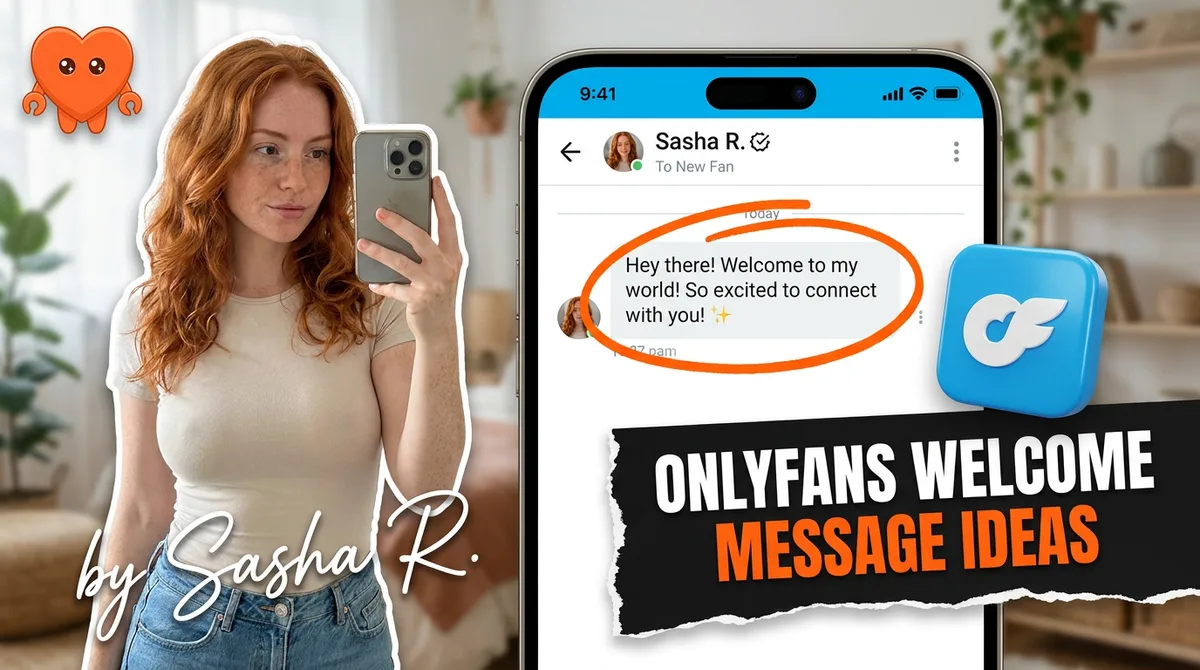
An OnlyFans welcome message is the automatic DM every new subscriber receives the moment they join, and it is the single most-read message you will ever send. The best ones are short, warm, and personal: thank the fan, point them to your best free content, and end with a question. The one move that costs creators money is leading with a paid offer. Greet first, sell later.
Below are seven welcome message ideas you can adapt today, plus how to set one up, how it should change between a free and paid page, and the mistakes that quietly kill conversions.
How to set up a welcome message on OnlyFans
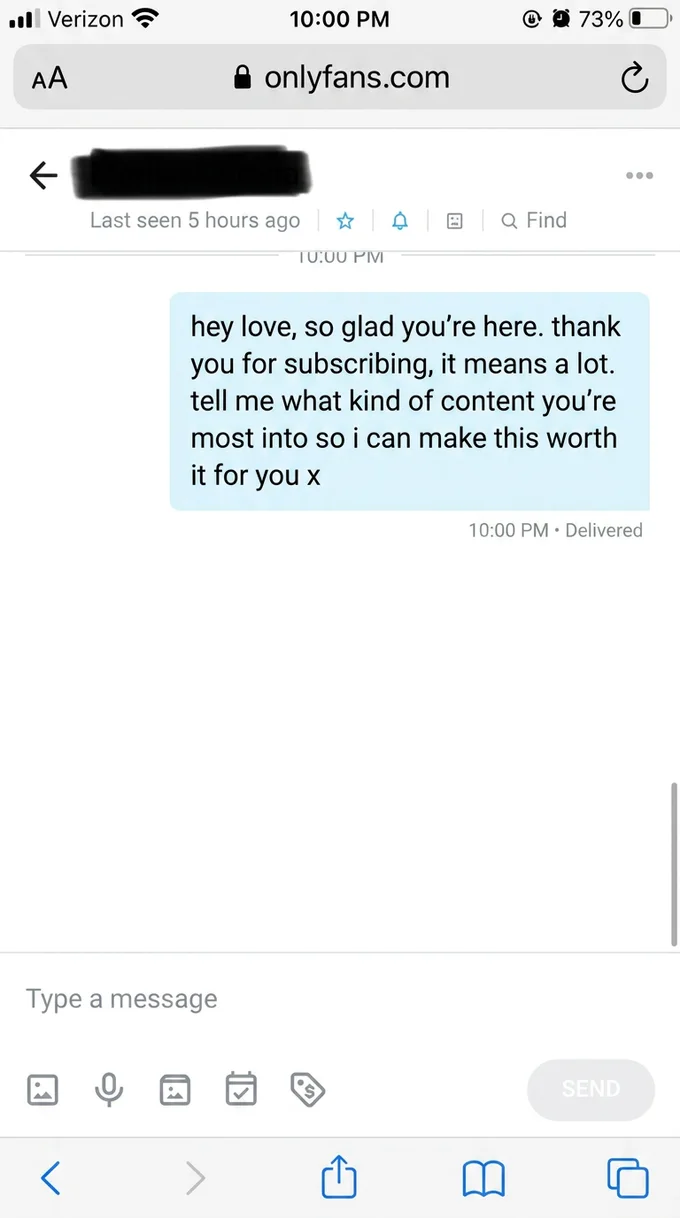
Setting up a welcome message takes about two minutes. Go to Settings, then Chats, then Welcome messages. Toggle the feature on, type your message into the text box, and save. Every new subscriber from that point on receives it automatically, the instant they join, with no work from you.
A few setup choices matter more than the rest:
- Attach media. You can add a free photo, a short video, or both. A subscriber who gets a visual is far more likely to reply, so a quick clip or a flattering image outperforms text alone.
- Keep the free teaser free. The welcome attachment should not be locked. This is the relationship-opening moment, not the first sale.
- Write it once, well. Because it sends on autopilot, a sloppy welcome message repeats your worst opener thousands of times. A good one repeats your best.
The welcome message is automation that OnlyFans builds in on purpose, which tells you everything about whether automating your inbox is allowed. It is. What matters is who runs it and whether it sounds like you.
What makes a welcome message convert
A welcome message converts when it feels like a person said hello, not when it tries to close a sale. The first minutes after someone subscribes are peak engagement, and the goal of those minutes is a reply, not a purchase. Every conversion that follows starts with that first back-and-forth.
Four ingredients do most of the work:
- A warm, specific greeting. Thank them for joining and, where the platform shows it, use their username. A named hello beats a blank one.
- A reason to reply. End with a question. "Where did you find me?" or "What kind of content are you most into?" both invite an answer and hand you useful information.
- A free taste. One non-locked photo or short clip signals generosity and sets the tone for a page worth staying on.
- A soft pointer, not a hard pitch. Mention that your pinned post has the full menu and your boundaries. That lets fans find your upsells without you shoving them.
Sell an emotional connection, not a transaction. Fans who feel seen in the first message spend more over the next month than fans who got pitched in the first minute.
Keep some perspective on why this matters. OnlyFans is a subscription-based content platform with more than four million registered creators, so the fan who just subscribed to you almost certainly follows other pages too. Your welcome is not landing in a quiet inbox. It lands next to a dozen other creators' openers, and most of those are a price tag. A real hello stands out precisely because so few people send one.
7 OnlyFans welcome message examples (swipe file)
Use these as starting points, then rewrite them in your own words so they match how you actually talk. Generic copy-paste text that fans have seen on ten other pages is the fastest way to read as a bot.
- The warm opener. "Hey, so glad you're here. I dropped a little welcome clip below just for you. Tell me, where did you find my page?"
- The question hook. "Welcome in. I actually read and reply to my DMs, so say hi and tell me one thing you're into. I love knowing who's on the other side."
- The free-teaser. "You made it. Here's a free photo to start things off. My pinned post has everything else, but first, what's your name?"
- The shared-interest. "Hi and welcome. Quick question before anything else: are you more of a gym, gaming, or stay-in-and-chill type? I tailor what I send."
- The VIP framing. "Welcome to the inner circle. The free stuff lives on the feed, the good conversations happen right here in DMs. What brought you in today?"
- The like-for-content (free page). "Hey, thanks for following. Like a few of my recent posts and I'll send you a free clip. And seriously, message me anytime, I don't bite unless asked."
- The low-key returning fan. "Welcome back, I noticed you resubscribed and that genuinely made my day. Anything you've been hoping I'd post? Tell me."
Notice what none of them do: none open with a price. The job of the welcome message is to start the conversation that earns the price later.
A few craft notes on rewriting these for yourself:
- Steal the structure, not the words. Each example is a greeting, one beat of personality or a teaser, then a single question. Keep that skeleton and swap in how you actually talk. If you say "hiya" instead of "hey," say hiya. If you swear, swear. The point of writing your own is that it survives the moment a fan tests you with a real reply.
- One question, not three. Stacking questions feels like a form. Pick the single question that earns you the most useful answer and cut the rest. "Where did you find me?" doubles as free attribution. "What are you into?" doubles as content research. You rarely need both in the opener.
- Read it out loud. If it sounds like a script when you say it, it reads like a script when they get it. The bar is simple: would you actually text this to someone? If not, loosen it until you would.
Free page vs paid page: how the message changes
The welcome message should change depending on whether your page is free or paid, because the two audiences are in completely different moods when they arrive.
| Free page | Paid page | |
|---|---|---|
| Subscriber mindset | Curious, hasn't paid yet | Already paid, wants value |
| Primary goal | Convert to a first purchase | Retain and deepen the bond |
| PPV in the welcome? | Light, optional offer is fine | No. It reads as greedy |
| Best lead | A free teaser plus a soft menu pointer | A genuine thank-you and a question |
On a free page, you have permission to nudge toward your first paid offer, but keep it gentle and put the welcome first. A subscriber who feels warmly received converts better than one who feels funneled.
On a paid page, the fan already opened their wallet to be here. Hitting them with another offer in the first message is the quickest way to make them feel like a target. Lead with gratitude, ask a question, and let the relationship do the upselling over the coming days.
Welcome message mistakes that quietly cost you money
Most weak welcome messages fail for the same handful of reasons. Fixing them is usually a one-line edit.
- Pitching PPV in the first message. The single most common mistake. It signals "I see a wallet, not a person" and it suppresses replies. Move the offer to the follow-up.
- Walls of rules. A list of dos and don'ts in the opener intimidates fans before they like you. Put boundaries in your pinned post, not your hello.
- No question. A welcome with no prompt gets read and ignored. Without a reply, you have no conversation, and the inbox is where the money is.
- Locking the teaser. A paywalled "free" gift contradicts itself. Keep the welcome attachment open.
- Generic, off-voice text. Copy that sounds like every other page reads as a bot. Fans forgive automation. They do not forgive feeling like a number.
Ask "where did you find me?" in every welcome message. It starts a conversation and quietly tells you which promotion channel is actually bringing in subscribers, which is free analytics you would otherwise pay for.
The follow-up is where the money actually is
The welcome message gets too much credit. It opens the door, but the sale happens in the second, third, and fourth message, once the fan has replied and you know something about them. Treat the welcome as the start of a short sequence, not a standalone, and a sequence that works without feeling like a funnel looks like this:
- Message one, the welcome. Greeting, free teaser, one question. No price. This is the message we have been talking about the whole way through.
- Message two, the genuine reply. When they answer, react to what they actually said. If they told you where they found you, thank them and ask a follow-up about it. If they named an interest, riff on it. This is the message most creators skip, and it is the one that turns a subscriber into a person who feels known.
- Message three, the soft surface. Now, and only now, you mention what you have. Not a hard pitch: a casual "I just shot something I think you'd like, want me to send it over?" works because it is framed as an offer to them, not a demand on them. You have earned the right to mention a price because you spent two messages earning their attention first.
- Message four onward, the rhythm. Keep checking in, keep it light, and let the buying happen on their timeline. A fan who hears from you like a person buys more over a month than one you closed in the first hour and never spoke to again.
The gap between message one and message two is where most first-day spend leaks away. The fan replies, you are filming or asleep, and by the time you answer the moment has cooled. That is the real problem, and it is not solved by writing a cleverer welcome line. It is solved by making the reply happen fast and still sound like you.
A practical structure: write the welcome, draft two or three likely message-two responses (one for "where did you find me," one for "what are you into," one for the fan who just says "hey"), and keep them somewhere you can grab them in seconds. You are not scripting the whole relationship. You are removing the delay that kills it.
How to send a welcome that still sounds like you
Here is the tension every busy creator hits: the welcome message has to be automatic to catch fans at peak engagement, but it has to sound human or it backfires. The answer is not to skip automation. It is to make sure the automation uses your words and that no stranger is running your inbox.
Most chatting tools that promise to handle your DMs are cloud services that ask for your OnlyFans login and read your fan messages on their own servers. That trades the time you save for a real account risk: a company you have never met holding your password. The safer pattern is automation that runs on your own machine, where your login and your conversations never leave your laptop.
This matters more as the platform grows. OnlyFans reported roughly 4.6 million creator accounts and 377.5 million fan accounts for its fiscal year ending late 2024, which is a lot of fan data flowing through third-party chatter services. Your conversations are personal, your fans trusted you with them, and handing all of that to a cloud tool you do not control is a bigger bet than most creators realize.
That is what FanClaw is: a local-first app that runs your DMs, posting, acquisition, and monetization from your own machine, so your fan data never leaves it. It sends your welcome flow and follow-ups in your own voice while you film or sleep, and keeps you in the loop on anything that matters. If you want the full picture of doing this safely, here is how to automate your OnlyFans DMs without handing your account to anyone, or you can download FanClaw and write your welcome flow tonight.
A welcome message is small, but it compounds. It is the one DM every fan reads, sent at the one moment they care most. Get it warm, get it personal, keep the selling for later, and make sure it is still you typing, even when it isn't.
Frequently asked questions
Go to Settings, then Chats, then Welcome messages. Toggle the feature on, type your message in the text box, and optionally attach a free photo or short video. Save it. From then on, every new subscriber receives that message automatically the moment they join.
A good welcome message is short, warm, and personal. Thank the fan for joining, point them to your best free content, and end with a question so the conversation keeps going. Keep it under about 100 words and avoid pitching paid content in the very first message.
On a paid page, no. Subscribers just paid, and an immediate upsell reads as greedy. On a free page, a light, optional offer is acceptable, but the greeting should still come first. Save the real selling for the follow-up once a conversation has started.
Yes. The welcome message is automation built into the platform, so it is fully allowed. The risk is not automation itself, it is handing your login to a third-party cloud tool or sending generic, off-voice text. Write it yourself and it stays compliant and personal.
Two to four short lines is plenty. Long messages get skimmed. You want a greeting, one line of personality or a teaser, and a single question or call to action. Anything past 100 words usually dilutes the one thing you want the fan to do next.
They help, because the first minutes after someone subscribes are when they are most engaged. Some management agencies report a warm welcome with a small free teaser lifts first-day spend meaningfully. The message itself rarely sells, but it opens the door to the follow-up that does.
Yes. Asking where a fan discovered your page does two things: it starts a natural conversation, and it tells you which promotion channel is actually working. It is one of the most useful questions you can put in a welcome message.
Most fans assume the very first message is automatic, and that is fine. What loses trust is a generic script that ignores them later. As long as your welcome sounds like you and your real replies follow, fans rarely mind that the greeting was queued.