OnlyFans restricted words: the 2026 list & rules
OnlyFans restricted words can get a message blocked or your account flagged. Here is what to avoid in 2026, why, and how to keep your messaging compliant.
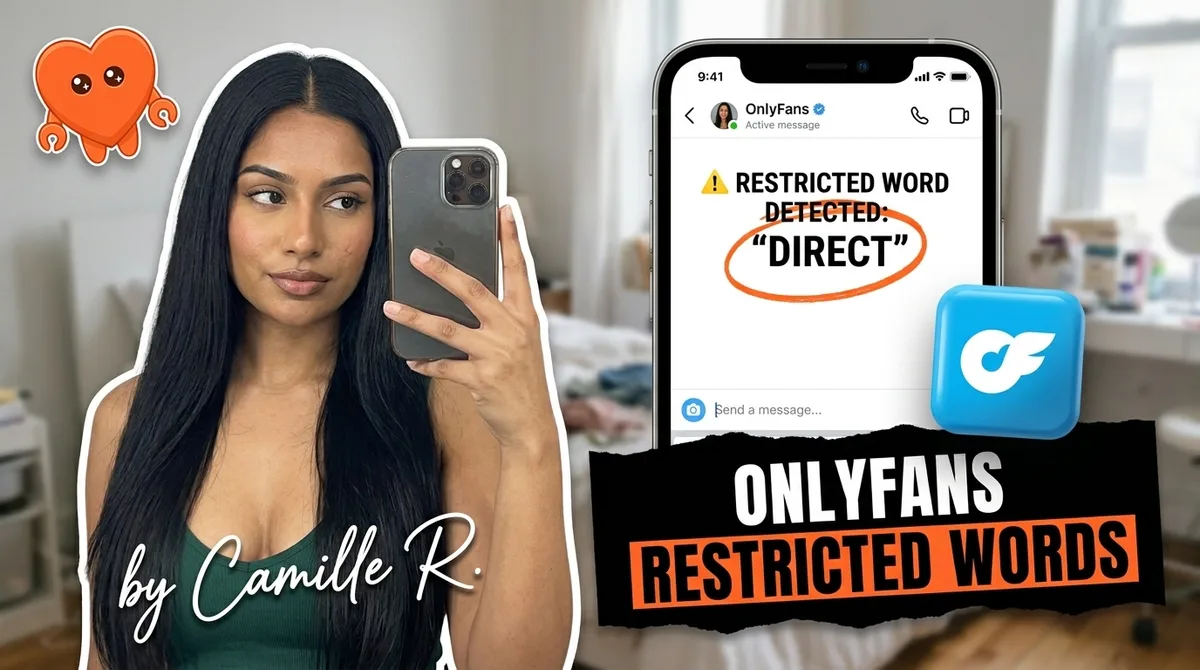
OnlyFans restricted words are terms and phrases that the platform flags automatically, either blocking a message before it reaches a fan or removing content and triggering an account review. As of 2026, OnlyFans does not publish a public master list of banned terms, but the categories are well-established through its Acceptable Use Policy, Terms of Service, and years of creator experience. Knowing those categories, not memorizing a fixed word list, is the reliable way to stay compliant.
Why OnlyFans Restricts Certain Words
OnlyFans runs a filter on messages, captions, and post descriptions because the platform operates under legal obligations that go beyond basic community guidelines. Payment processors, banking partners, and regulators in multiple jurisdictions hold OnlyFans accountable for content that suggests illegal transactions, involves minors, or implies non-consensual acts. Failure to moderate that language puts the platform's entire payment infrastructure at risk.
The practical result for creators: certain words cause a hard block the moment you try to send them. Others trigger a review queue. Some categories carry zero-tolerance enforcement, meaning a single instance can escalate directly to account suspension rather than a warning. Understanding which category a word belongs to tells you exactly how much risk you are carrying.
The Seven Categories of Restricted Words on OnlyFans
OnlyFans does not enforce a simple keyword blocklist. It enforces categories of meaning. A word is flagged because of what it implies, not just what it spells. Here is how those categories break down, and why each one exists.
| Category | Why it is flagged | Enforcement level |
|---|---|---|
| Age-play and minor-adjacent language | Legal zero-tolerance. Any term that implies a participant is under 18 or role-plays that scenario triggers immediate escalation. | Immediate review, likely permanent ban |
| Non-consent and force framing | Implies content that OnlyFans's payment partners will not process. Violates the platform's Acceptable Use Policy outright. | Removal and account review |
| Family and incest terminology | Specific terms fall under a content prohibition in the Terms of Service regardless of whether content is fictional. | Content removal, account warning |
| Drug sales and solicitation | Language that suggests buying or selling controlled substances, not content merely referencing drug use in a narrative context. | Message blocked, account review on pattern |
| Extreme bodily-fluid content descriptors | Specific clinical or slang terms for acts that exceed the platform's content guidelines, separate from the broader adult content it permits. | Content removal |
| External payment platform names | Venmo, Cash App, PayPal, Zelle, and similar. OnlyFans prohibits steering fans to off-platform transactions. This is actively keyword-watched in DMs. | Message blocked; escalates quickly on repeat |
| Escort, in-person, and real-world solicitation | Language that implies selling physical access, meeting a fan in person for money, or any service arrangement that moves outside the content platform context. | Immediate account review |
| Celebrity names and copyrighted titles used as association claims | Implying endorsement by or impersonation of a real person or brand. A DMCA flag and a platform violation can arrive simultaneously. | Content removal, potential legal exposure |
Age-play and minor-adjacent language
This is the highest-risk category on the platform, and the enforcement is not proportional: a single message or post that triggers this filter can lead to permanent suspension without a formal warning. The category covers any phrasing that suggests a participant is or is role-playing as being under 18, any diminutive framing intended to imply youth, and any scenario language that investigators or automated systems would classify as age-play. There is no grey zone here.
Non-consent and force framing
OnlyFans permits a wide range of adult content, but it draws a clear line at language that depicts or implies sexual activity without consent. This is both a platform policy and a payment processor requirement. Visa, Mastercard, and the banks behind them have published explicit requirements about the content types they will and will not process, including age and identity verification and a content review process before publication. Language that implies coercion, force, or lack of consent puts the platform's financial infrastructure at risk, which is why enforcement in this category is fast and severe.
External payment terms
This category produces more day-to-day friction than any other for active creators. OnlyFans takes 20 percent of every transaction on the platform. Steering a fan to send money via an external service directly costs the platform revenue, so DM-level filtering for the names of payment apps and transfer services is active and sensitive. Even a casual mention of a payment app name in a DM (for example, asking a fan to use one for a custom order) can block the message immediately. Keep every transaction inside the platform.
Escort and in-person solicitation
The platform is a content subscription service. Language that implies physical access or in-person services does not just risk a platform violation; it creates legal exposure under laws that vary by jurisdiction. Even phrasing that is clearly fictional or roleplay-framed can trip these filters because automated systems flag the underlying vocabulary regardless of context. Describe content and experiences, not in-person arrangements.
What Happens When a Restricted Word Is Detected
The consequences are not uniform. They depend on the category and the pattern.
In DMs: the message is blocked before delivery. The creator sees a generic error. The fan never receives the message. A one-off block typically does not cause a formal review. A pattern of blocked messages in a short window, or a single message that falls into a zero-tolerance category, can escalate to an account hold while OnlyFans reviews the conversation.
In posts and captions: the content may be removed and the post delisted before it reaches subscribers. Repeated post-level violations escalate faster than DM violations because they affect public-facing content. The escalation path is roughly: warning, then temporary suspension, then permanent ban if the behavior continues.
Zero-tolerance categories: anything touching the minor-adjacent or non-consent categories does not follow the graduated path. A single instance in either of those categories is treated as an immediate policy violation and reviewed for permanent suspension. There is no three-strikes model for these.
Account review vs. immediate ban: most categories generate a flag and a human review before action is taken. The platform does not publish its review timelines, but a flagged account typically sees limited functionality (blocked from posting, DMing, or withdrawing) while the review is active. That loss of access is itself a significant business disruption, even if the outcome is a cleared account.
How to Phrase Safely: Practical Rewriting Patterns
The restriction is on specific vocabulary, not on subject matter categories the platform permits. A message can describe the same content using compliant language and send without issue. The underlying rule is: describe rather than name, imply rather than state explicitly when it comes to anything in the flagged categories.
External payments. Instead of naming an app, reference the platform's own mechanism: "I can send you a custom PPV," "I put together something exclusive, check your inbox," or "tip me through the platform and I will put it together for you." Never name a payment service in a DM.
Age and identity. Describe maturity and experience. Use language that implies professional, adult, and established, not young or new in ways that could be misconstrued. If a fan uses phrasing that edges into flagged territory in their own messages, do not mirror it back.
Content categories. For content descriptions, use genre vocabulary and vibe language rather than clinical or slang terms that appear in the restricted categories. "Intense," "dominant," "fantasy scenario," "power dynamic" are the kind of language that describes content within permitted territory without triggering filters.
Celebrity and brand references. Reference categories, aesthetics, and eras rather than specific names. "Classic Hollywood glamour" is different from naming a living celebrity. "Vintage editorial style" works where a brand name would not.
How Automated Messaging Changes the Risk Profile
Most active creators use some form of automated messaging: welcome messages, mass messages, follow-ups, PPV sequences. The filter operates identically on automated sends as on manual ones. A template that contains a flagged term will block every message in the sequence, often without any notification beyond a generic send failure.
This is where automation tooling creates a specific risk that manual messaging does not. When a creator types a message manually, she reviews it before sending. When an automated tool sends at scale, potentially thousands of messages per week, a single flagged template can generate hundreds of blocked send attempts before anyone notices. A pattern of blocked sends looks, from the platform's perspective, like a systematic attempt to push policy-violating content.
The tools that carry the highest risk here are cloud-based services that generate message content remotely and send it from servers the creator does not control. The creator has no visibility into what those tools are actually sending, no ability to review the exact text before it goes out, and no easy way to audit the full message history if OnlyFans flags the account.
The safer model is automation that runs on your own machine, generates in your voice, and lets you review anything before it goes out. FanClaw is built on that design. The agent runs locally, your messages are generated in your editorial voice, and you can inspect every draft before it sends. No cloud server is producing output you cannot see. For the full picture on why OnlyFans accounts get banned and how cloud tools factor into account risk, that article covers the structural problem in detail.
The Compliance Habit That Actually Protects You
Restricted word compliance is not a one-time setup. OnlyFans updates its Acceptable Use Policy periodically. Categories that were grey areas in prior years have been hardened. The external payment category has become more actively enforced as the platform grows its own monetization features.
The practical habit is three things: know the categories (not a word list), use on-voice compliant language in all your messaging (manual and automated), and review your automated templates whenever you make a significant change to your content focus or fan communication strategy.
Creators who run into recurring compliance friction are almost always in one of two situations: they are using an automated tool that generates content without their review, or they are using phrasing they learned on another platform (Reddit, Instagram, X) that is normal there but flagged on OnlyFans. The standards differ by platform, and what is acceptable elsewhere may not be acceptable in the OnlyFans DM environment.
Running messaging that stays in your own voice, on your own machine, that you can review before it sends, removes both sources of friction. If you want to run your DMs and content at scale without those risks, download FanClaw and run the trial on your own machine.
Frequently asked questions
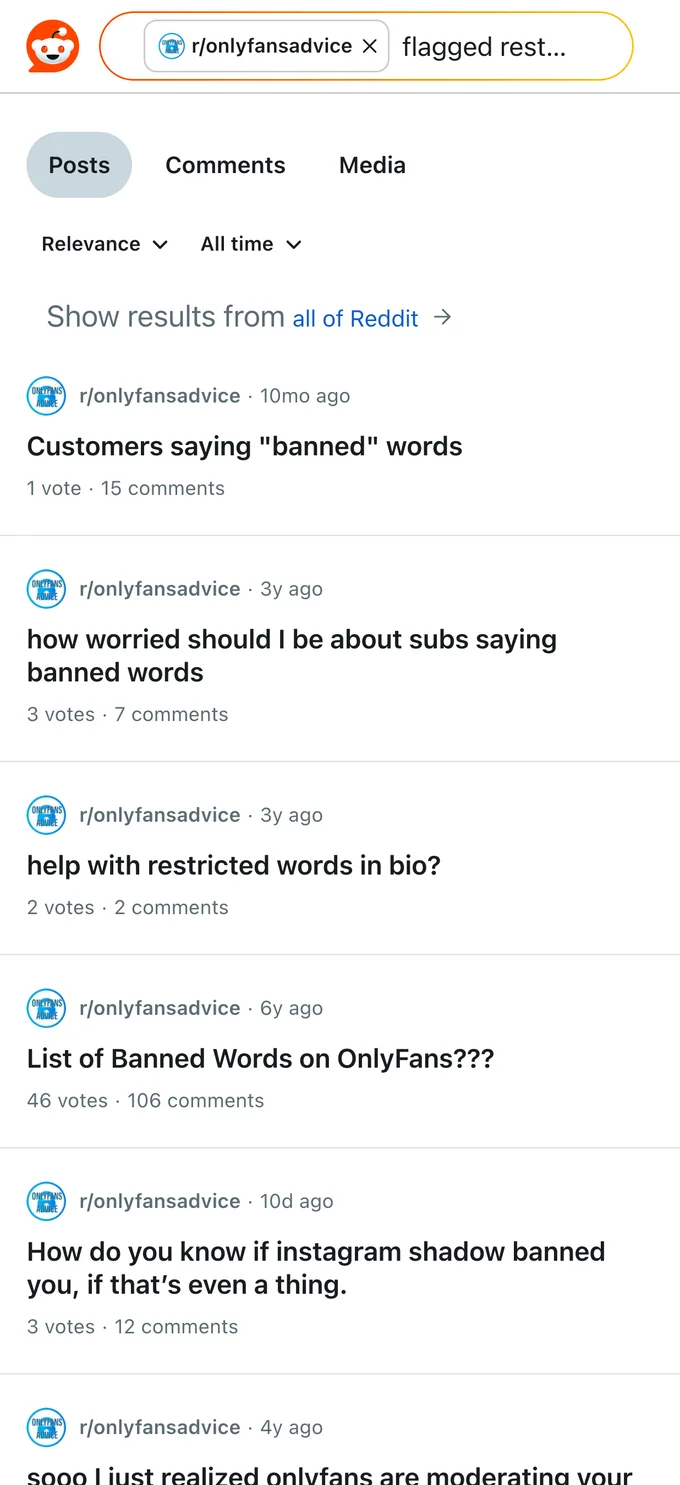
OnlyFans does not publish a public master list of restricted words. The categories are defined in the platform's Acceptable Use Policy and Terms of Service. Creators learn the boundaries through community experience, policy violations notices, and tools that flag terms before messages are sent. When in doubt, describe rather than name.
For messaging, OnlyFans typically blocks the message at the point of sending and shows the creator a generic warning. The message does not reach the fan. Repeated blocks in a short window can escalate to a formal account review, which is why one-off mistakes are less dangerous than patterns.
A single blocked message rarely causes a ban on its own. However, content that falls into zero-tolerance categories (anything involving minors, non-consensual framing, or trafficking language) can trigger immediate escalation rather than a simple block. The risk scales with the category, not just the frequency.
The underlying policy is the same, but enforcement mechanics differ. Restricted words in captions or post descriptions can cause content to be removed and the post delisted. In DMs, the message is blocked before delivery. Repeated post-level violations escalate faster because they affect public-facing content, not just private conversations.
Keep all transaction language inside OnlyFans: refer to PPV messages, tips, or subscription renewals directly. Never mention Venmo, Cash App, PayPal, Zelle, or any external platform by name in a message to a fan. Say 'I sent you a message with exclusive content' rather than directing fans to send money elsewhere.
Yes. OnlyFans applies the same content filters regardless of whether a message is sent manually or through an automated workflow. Any automation tool that sends messages on your behalf needs to pre-screen its output against the same categories you would check manually.
Using a celebrity name or copyrighted brand in a way that implies endorsement, association, or impersonation can trigger both a platform violation and a legal claim. Describing categories of content ('inspired by classic noir cinema') is generally safer than naming a specific title, brand, or person you do not have rights to reference.
FanClaw runs on your own machine and generates messages in your voice using frontier models. Its output is designed to stay in natural, on-voice language that avoids policy-sensitive phrasing. No message goes out without passing through the same compliance boundaries your manual messages are held to, and you can review anything before it sends.