How to manage OnlyFans alone: a solo system
You can manage OnlyFans alone with a system, not more hours. Here is the daily and weekly routine, a time-box, and the batching workflow that makes it hold.
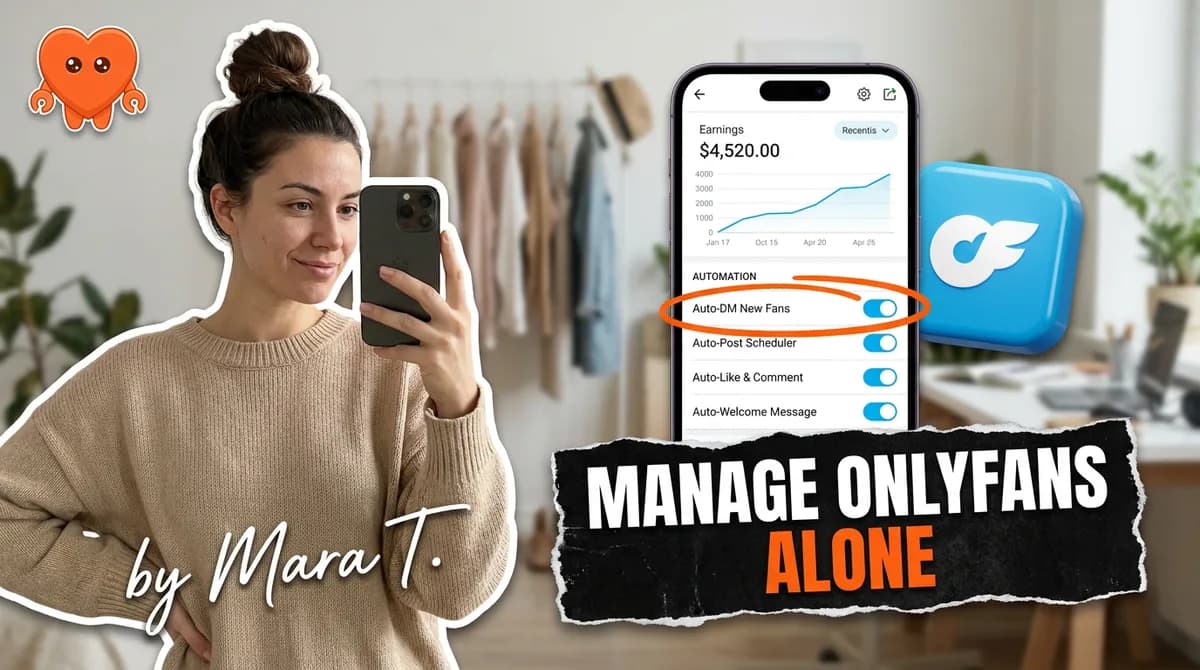
You can manage OnlyFans alone. The creators who do it for years are not working harder than the ones who burn out in three months. They are working off a system: a fixed daily routine, content filmed in batches, and an inbox that covers itself while they sleep. Running solo is a scheduling problem, not a talent problem.
This is the working version of that system. The real hours a solo account takes, a time-box you can copy, the batching workflow that frees your week, and how to keep the DMs handled without living inside them.
Can you really run OnlyFans by yourself?
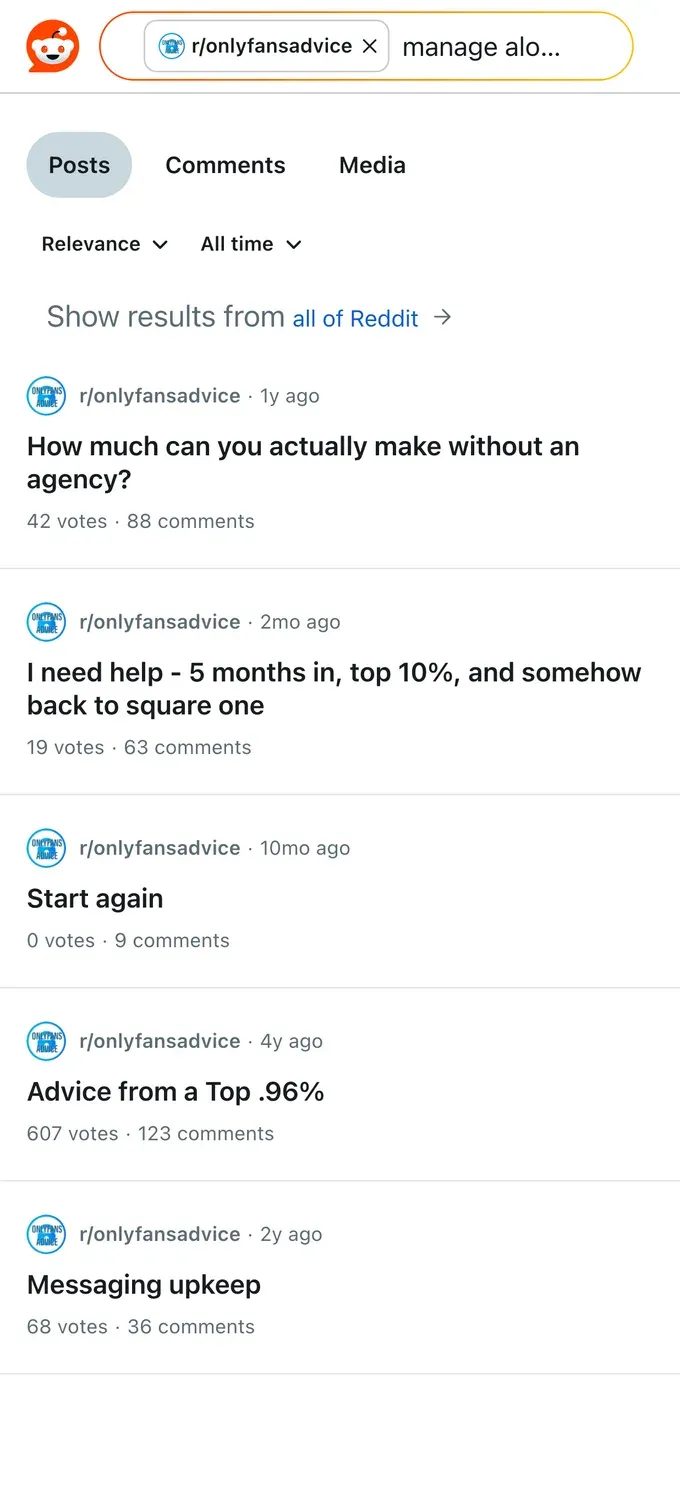
Yes. Most OnlyFans accounts under a few thousand subscribers are run by exactly one person, and plenty of six-figure pages are too. The thing that stops solo creators is never ability. It is volume. One person can write great content and have great fan instincts and still drown, because creating content and answering an inbox are two separate full-time jobs, and a solo creator is signed up for both.
The honest framing matters here. You do not need a manager to run your business. An agency takes 30 to 50 percent of your gross on top of the 20 percent the platform already takes, and the one thing it reliably sells you is hours. If you can get the hours under control yourself, you keep the whole margin and the control. That is the entire case for solo, and it is the case this guide is built to make practical.
What you are really deciding is not "can I do this," it is "can I do this without it eating my life." The answer is yes, but only with structure. Winging it is what breaks people.
How many hours does it take to run OnlyFans solo?
By hand, a growing solo account runs 45 to 70 hours a week, and the inbox is the biggest single piece. Creators consistently describe the same shape: wake to 200 or more unread DMs, clear them through the morning, film and edit in the afternoon, post, then come back to the inbox until 2am. Sixteen hour days are common in the first few months. That pace is exactly why burnout is the number one reason creators quit.
The useful move is to see where the hours actually go, because most of them are repetitive and predictable. Here is a realistic week for a solo creator, by hand versus with a system in place. Treat the numbers as typical ranges creators report, not a survey.
| Task | By hand, per week | With a system |
|---|---|---|
| Answering DMs | 20 to 30 hrs | 3 to 6 hrs (review and approve) |
| Filming + editing | 10 to 15 hrs | 6 to 8 hrs (batched) |
| Posting + scheduling | 7 to 10 hrs | 1 to 2 hrs (queued) |
| Promotion (Reddit, X, IG) | 7 to 10 hrs | 2 to 4 hrs |
| Admin, analytics, planning | 3 to 5 hrs | 1 to 2 hrs |
| Total | ~47 to 70 hrs | ~13 to 22 hrs |
The DM row is where the time disappears and where the system pays for itself hardest. Most of those 20 to 30 hours are not real conversations. They are the same welcome, the same follow-up, the same "you still there?" typed a hundred times. That is the work to take off your plate first, and the rest of this guide is ordered around doing it.
What does a solo OnlyFans routine look like, day to day?
A solo routine works when it is the same every day and most of it is review, not raw labor. The point is to touch each part of the business once, on purpose, instead of reacting all day. Here is the shape that holds up.
The daily loop (about 2 to 3 hours of real work)
Run the inbox first, but review it instead of rewriting it. Skim everything that came in overnight, then spend your attention only on the money conversations: custom requests, PPV follow-ups, and your top spenders. The routine greetings and nudges should already have gone out on their flows. Then post your scheduled piece (it is already filmed and queued, you are just confirming), drop one promotion (a Reddit post or an X teaser), and check your numbers for two minutes. That is the loop. The work that used to fill a day fills a morning, because filming and writing are not happening in it.
The weekly blocks (the heavy lifting, batched)
Pull the two heavy jobs out of the daily loop and give each its own block. One filming session and one edit-and-queue session per week is enough for most creators. A separate hour for planning the next batch and reviewing what converted. Keep these blocks on a calendar and protect them, because the daily loop quietly expands to swallow them if you let it.
The "you are off" hours
Decide your offline hours and mean them. Outside your working window, your account should still be active through covered flows in your wording, but you are not in the inbox. The distinction that keeps you sane: your account being live and you being available are two different things, and both can be true at different times. If you want the full anti-burnout version of this split, here is how to run OnlyFans solo without burning out.
How do you batch OnlyFans content as one person?
Batching is the highest-leverage habit a solo creator has. The idea is simple: shoot many pieces in one session, then edit and schedule them all at once, so filming and posting stop being the same daily task. One focused afternoon can cover one to two weeks of feed. A full 8 hour day, run well, can stock close to a month. Creators who batch report freeing up dozens of hours a month that used to go to filming on demand.
Here is the workflow, start to finish:
- Plan the shot list first. Before you touch a camera, write out the looks, outfits, and scenarios for the whole batch. Mix feed posts, teasers, and PPV-grade pieces in one list. Planning blind is what makes filming days drag.
- Film in blocks by setup, not by post. Shoot everything for one outfit and one location back to back, then change once. Changing setups for every single piece is where filming days balloon from three hours to eight.
- Capture more than you think you need. Stills and clips you do not post this week become next week's queue. A surplus is the buffer that lets you take a day off without scrambling.
- Edit in one pass, not piece by piece. Sit down once, cut everything, write the captions, set the prices, and tag what is feed versus PPV. Context-switching between filming and editing every day is a hidden tax.
- Queue across both platforms. Schedule the batch on OnlyFans and Fansly together. Running both is the 2026 norm, and a single batch feeding both queues is what keeps the second platform from doubling your work.
Cadence sanity: you do not need to post more to earn more. Every other day or three to five feed posts a week is a healthier rhythm than daily for most creators, with PPV a couple of times a week and a mass message a few times a week. Batching is what makes that cadence effortless instead of a daily scramble.
How do you handle DMs alone without living in your inbox?
Cover the routine inbox automatically and reserve yourself for the conversations that matter. The math is brutal if you ignore it: DMs are the single biggest revenue lever on OnlyFans, fans in other time zones spend while you sleep, and a $50 custom that sits for eight hours usually goes cold. You cannot out-hustle that by being awake more. You cover it with flows.
Three flows carry most of the volume:
- A welcome flow that greets every new subscriber the moment they join, in your wording, with a soft next step. New subscribers are warmest in the first few minutes, and this is the message you cannot match by hand.
- A same-day follow-up to anyone who opened but did not buy. Most sales happen after the first message, so one timed nudge recovers conversations that would otherwise die.
- A re-engagement nudge to fans who have gone quiet for a set number of days. Lapsed fans rarely come back on their own, and a short on-voice check-in brings a measurable share of them back.
Now the part the popular tools get wrong. Every chatting tool that ranks today (Supercreator, Infloww, and the rest) takes your OnlyFans login into its own system, whether that is its servers, a proxy it assigns, or a shared team session. A company you have never met can act as you and read your fan messages. The safer pattern is automation that runs on your own machine, where your login and your fan data never leave your laptop. That is exactly what FanClaw is: a local-first app that runs your DMs, posting, acquisition, and monetization from your own machine, text-only, with the messages drafted in your editorial style while you approve what involves money. You can download FanClaw and watch a full first night run locally before you decide anything.
The rule that keeps this safe and human: automation handles volume, your judgment handles the moments. Keep an approval step on anything with money, a custom request, or a fan who is clearly upset. Disclose AI where the platform expects it. That combination buys back your nights without making your inbox sound like a robot.
The fastest way to lose your account as a solo creator is handing your login to a cloud tool that signs in as you. If a tool asks for your OnlyFans password so it can run on its servers, your credentials, your fan messages, and your earnings now live somewhere you do not control. Keep the automation on your own machine.
One more thing solo creators get wrong: they treat the inbox as either fully manual or fully hands-off. It is neither. The right split is a sliding one. Early on, you review most of what the flows draft. As you learn that the welcome and the re-engagement nudges sound right and convert, you stop reviewing those and keep your eyes only on the money conversations. The amount you personally touch should shrink as your trust in the system grows, not stay frozen at one extreme.
Can one person really run multiple platforms solo?
Yes, and the system above is what makes it possible. The mistake creators make is treating OnlyFans and Fansly as two jobs: two dashboards, two inboxes, two posting schedules, two of everything. Run that way, the second platform doubles your hours and you quit it. Run from one batch and one inbox workflow, the second platform is mostly free.
There is one more reason solo works better than it looks. Running both platforms yourself means you own all of your data: which fans spend, which previews convert, which price points unlock. That insight is the difference between a creator who outperforms an agency-managed account and one who does not, and it only stays yours if it never leaves your machine. The moment you hand the operation to a third party, the knowledge that should compound for you starts compounding for them.
The solo operating system, in one line: batch your content so filming stops being daily, queue it across both platforms, cover the routine inbox with flows in your voice on your own machine, and spend your real attention on the money conversations and the creative work. That is how one person runs a full creator business without an agency and without an 18 hour day. The hours come back, the margin stays yours, and your fan data stays on your machine. None of it requires another person logging in as you.
Frequently asked questions
By hand, a growing solo account runs 45 to 70 hours a week, and the inbox is the largest slice at 20 to 30 of those hours. Most of that is repetitive: welcome messages, follow-ups, and re-engagement that follow the same pattern every time. With content batched and the routine DM volume covered automatically, creators pull the same week down toward 15 to 25 hours of real work.
Yes. Thousands of creators run six-figure accounts solo with no agency. The only thing an agency reliably solves is the hours, and the hours are now a solvable problem. An agency costs 30 to 50 percent of your gross on top of the platform's 20 percent, so going solo keeps the margin if you can keep the workload under control.
You can do most daily tasks from a phone (posting, replying, checking analytics), but running a real solo system from a phone alone is slow and error-prone. Filming and editing happen off-platform, batching needs a real editing setup, and inbox coverage that runs while you sleep needs to run on a machine that stays on. Treat the phone as one input, not the whole operation.
Clear the overnight inbox first, but review it, do not write every reply from scratch. Skim what came in, answer or approve the money conversations (custom requests, PPV follow-ups, big spenders), and let the routine greetings and nudges run on their flows. Doing the high-value 10 percent by hand and letting the rest run is the difference between a 30 minute morning and a three hour one.
With message flows that fire on their own: a welcome to every new subscriber, a same-day follow-up to anyone who opened but did not buy, and a re-engagement nudge to fans who went quiet. The safest version runs on your own machine in your own wording, so no third party holds your login and the messages still sound like you. Fans in other time zones get a timely reply instead of silence.
Pick one filming day, shoot multiple looks and scenarios back to back, then edit and queue everything in a second session. One focused afternoon can cover one to two weeks of feed, and a full 8 hour day can stock close to a month. Batching decouples filming from posting, which is the single biggest time win for a solo creator.
Yes, and running both is the 2026 standard. The workload only doubles if you manage both by hand. Cross-post the same batched content, queue posts on both, and cover both inboxes with the same authored flows. The trap is logging into two dashboards all day; the fix is one queue and one inbox workflow feeding both platforms.
Run it alone if the workload is your only blocker, because that is now fixable without giving away a cut or your login. Consider help only when you have a genuine distribution advantage you cannot replicate yourself, like a real paid acquisition channel. Hiring a chatter or agency solves the hours but costs you 30 to 50 percent and hands a stranger your fans' messages, so solve the hours first and see if you still need anyone.